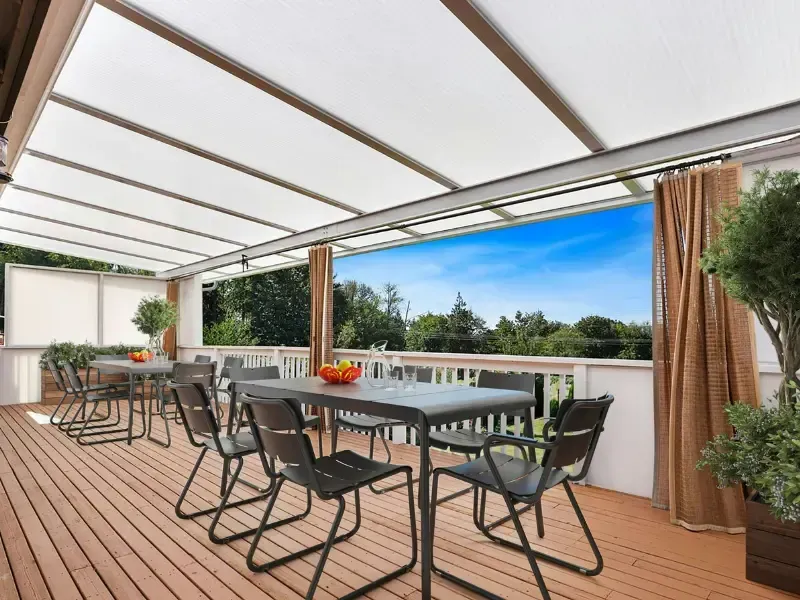
Are Insulated Patio Covers Worth It in Franklin, TN?
Usually, and not for the reason people expect. The insulation matters, but the bigger difference is that insulated panels are structural — they span post to post without framing underneath. That's why insulated covers look cleaner from below, and it's the part nobody explains at the quote.
By Jeremy Bolton, Founder and Owner · Last updated August 18, 2026
Patio Cover or Pergola?
Quick answer before anything else, because the words get swapped and they're different products.
A patio cover has a solid roof. Rain stops. A pergola has an open roof of spaced rafters or slats. Rain passes through and you get filtered shade instead of shelter. If you want to sit outside during a Middle Tennessee thunderstorm, you want a cover. If you want dappled light over a seating area, you want a pergola.
There's a middle option too — a lattice or shade-bar top, which is a cover frame with a slatted roof. Our lattice guide covers how slat depth and spacing set the shade, and the live patio cover types comparison puts all the styles side by side.
The rest of this page is about solid covers, and specifically the panel choice that drives most of the cost difference.
Insulated vs Non-Insulated in a Tennessee Summer
Two panel types, and the gap between them is wider than the price suggests.
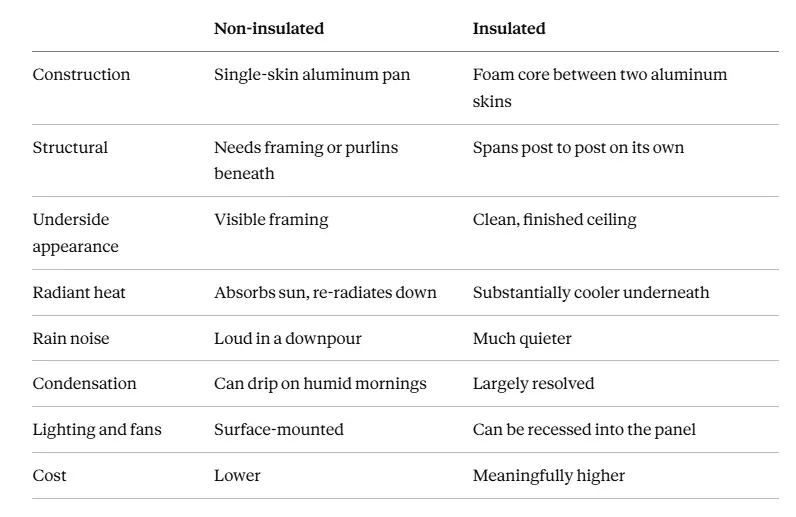
The structural point is the one that changes how it looks. A single-skin pan can't carry itself over any real distance, so it needs rafters or purlins underneath. You see them. An insulated panel is a sandwich — foam bonded between two aluminum skins — and that assembly is stiff enough to span from beam to beam unaided. The result is a flat, finished ceiling with nothing crossing it, which is why insulated covers read as an extension of the house rather than a structure parked against it.
Radiant heat is the comfort point. Bare aluminum in full July sun absorbs heat and re-radiates it downward. You're shaded but you're sitting under a warm ceiling. The foam core interrupts that, and the difference on a hot afternoon is noticeable rather than theoretical.
Rain noise is the one people don't consider until they've lived with it. A thunderstorm on a single-skin aluminum panel is genuinely loud — conversation-stopping. The insulated version dampens it considerably. In a climate that produces the storms Middle Tennessee produces, that affects how often you actually use the space.
And insulated panels largely solve the condensation drip that bare aluminum produces on humid mornings — the same issue we cover in our aluminum versus wood comparison.
So which contractor handles insulated patio covers in Nashville area work should be able to explain the span difference, not just quote a thicker panel.
Franklin's Permit Rule for Covered Structures
Franklin requires a permit for this, and there's one rule worth checking before you design anything.
The City's residential construction standards provide that a deck may encroach into a rear setback only if it is not covered. A patio cover has a roof. So covering an existing deck means the structure has to meet the full rear setback rather than the encroachment the open deck was allowed — and if that deck was built close to the line, the cover may need a smaller footprint or a different position.
Beyond that: Franklin requires a building permit for additions and renovations generally, porches need a minimum of 6 feet of usable depth, and property inside a Historic Preservation Overlay requires contacting the Historic Preservation Planner before any permit issues. Our screen room guide for Franklin works through the permit process, the historic design guidelines, and who is required to pull the permit.
Any patio cover contractors Williamson County TN homeowners are comparing should be checking the plot plan against the setback before drawing.
How Long Do Aluminum Patio Covers Last Here?
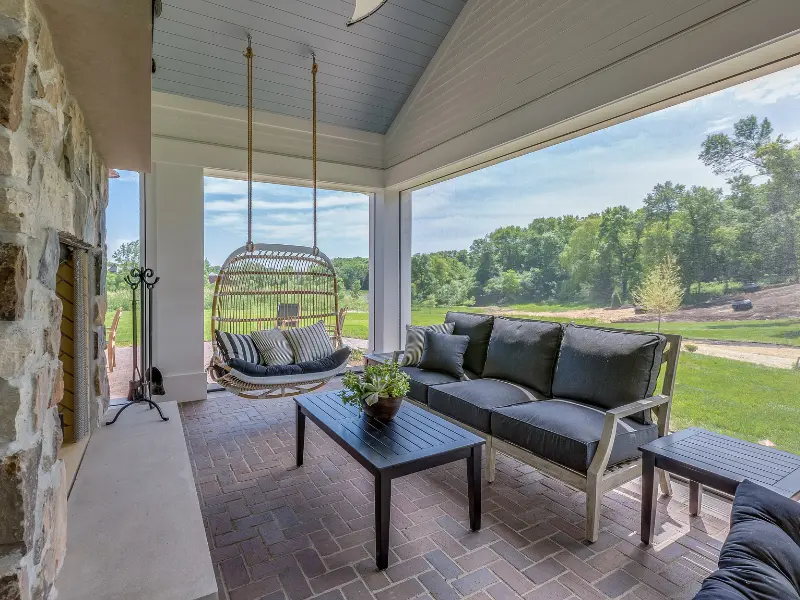
An aluminum patio cover Middle Tennessee homeowners install properly is a multi-decade structure, and the factory finish usually ages before the metal does.
Aluminum doesn't rust — rust is iron oxide, and aluminum contains no iron. It forms a tight, self-limiting oxide layer instead, so a scratch seals itself rather than spreading. That's a real advantage in this humidity, and it's why an aluminum cover doesn't stain siding or a patio the way steel eventually can.
What does shorten one is the connections. Aluminum sits at the active end of the galvanic series, so where it meets steel fasteners with moisture present, the aluminum gives way. A properly built cover uses compatible fasteners with isolation at dissimilar-metal joints and sealant at penetrations. Failures cluster at the joints, not in the middle of a panel.
The other thing that matters is the attachment to the house. An attached cover hangs off a ledger, and that ledger needs flashing directing water out rather than behind it. Water getting in at that line damages the house, not the cover.
Cost, and What Drives It
How much does a patio cover cost tracks covered area, span between posts, panel type, whether the structure attaches to the house, footing depth, and any electrical for fans or recessed lighting.
Span drives it faster than square footage. Longer clear spans need heavier beams or thicker insulated panels, and both cost more per foot. Insulated panels cost meaningfully more than single-skin, though some of that comes back as reduced framing.
On what is the best material for a patio cover: aluminum for low maintenance and clean spans, wood where matching an existing structure or a historic property matters. In a Franklin overlay, wood is often the only approved option — which the screen room guide covers.
We price from measurements on site rather than square footage over the phone, estimates are free, and financing is available.
Value, and Franklin Yards
Do patio covers add home value is best answered as usable space rather than appraisal. Nothing appraises a patio cover as a line item. What it does is turn a patio nobody uses in July into a room, and covered outdoor space shows well.
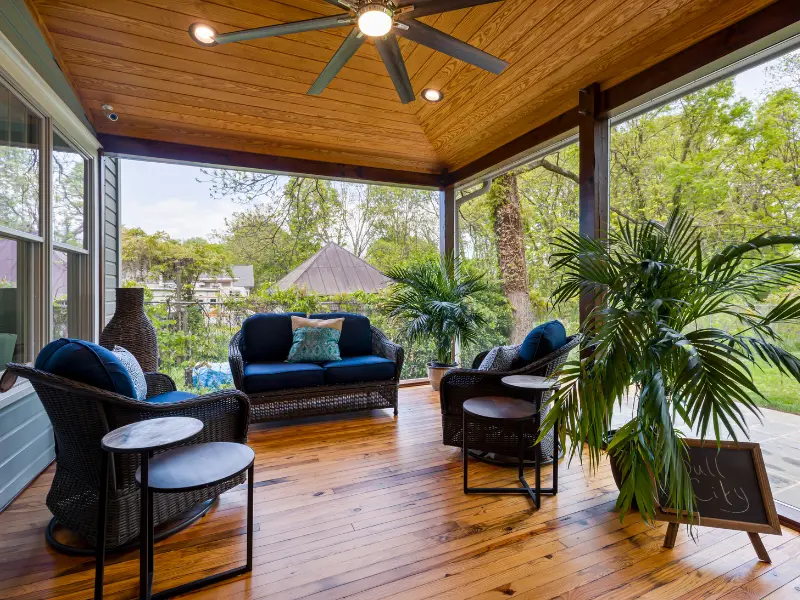
What matters at resale is whether it looks designed. A cover whose roof pitch, fascia, and finish relate to the house reads as part of the property. A visibly bolted-on structure with framing showing underneath reads as an add-on — which is the practical argument for insulated panels beyond comfort.
Across Franklin the constraint varies. Cool Springs and the newer subdivisions are graded lots with straightforward attached covers and HOA design standards worth checking alongside the City's. Westhaven carries its own architectural review. Historic downtown Franklin and the older streets sit inside overlays where material and visibility drive the design. Rural Williamson County parcels have room to work and more variation in ground conditions and footings.
We build across Franklin, Cool Springs, and Westhaven plus Brentwood, Nolensville, and the wider area. Structures are on our patio cover page, with screen rooms as the next step up, the full area list on our locations page, completed builds in the gallery, and the build sequence in our installation guide. Covered patio builders Nashville area homeowners hire work under Metro's rules, which differ from Franklin's.
If you've been searching patio cover installation Franklin TN, comparing the best patio cover installers near Franklin TN or the top rated patio cover contractors in Williamson County, ask two things: is my deck inside the rear setback, and will the panel span without framing underneath?
Frequently Asked Questions
1. How much does a patio cover cost in Franklin TN?
Cost tracks covered area, span between posts, panel type, whether the cover attaches to the house, footing depth, and any electrical for fans or recessed lighting. Span drives cost faster than square footage, since longer clear spans need heavier beams or thicker insulated panels. Insulated panels cost meaningfully more than single-skin, though some of that comes back as reduced framing. Quotes come from on-site measurements at no charge, and financing is available.
2. Do I need a permit for a patio cover in Franklin Tennessee?
Yes. Franklin requires a building permit for additions and renovations, and a patio cover qualifies. One rule matters especially: a deck may encroach into a rear setback only if it is not covered, so roofing an existing deck means meeting the full rear setback instead — which can change the footprint or position. Porches also require a minimum 6 feet of usable depth, and property inside a Historic Preservation Overlay requires contacting the Historic Preservation Planner before a permit can be issued.
3. What is the difference between a patio cover and a pergola?
The roof. A patio cover has a solid roof that stops rain, making the space usable in weather. A pergola has an open roof of spaced rafters or slats, giving filtered shade while rain passes through. A lattice or shade-bar top sits between them — a cover frame with a slatted roof, where slat depth and spacing determine how much shade you get. Choose based on whether you need shelter or shade.
4. Are insulated or non insulated patio covers better for Tennessee climate?
Insulated, for three reasons. Bare single-skin aluminum absorbs sun and re-radiates heat downward, so you're shaded but sitting under a warm ceiling — the foam core interrupts that. Rain noise on a single-skin panel during a Middle Tennessee thunderstorm is loud enough to stop conversation, and insulated panels dampen it considerably. And insulated panels are structural, spanning post to post without framing beneath, which gives a clean finished underside and largely resolves the condensation drip bare aluminum produces on humid mornings.
5. How long do aluminum patio covers last in Middle Tennessee?
A properly built aluminum cover is a multi-decade structure, and the factory finish typically ages before the metal. Aluminum doesn't rust, since rust is iron oxide and aluminum contains no iron — it forms a tight, self-limiting oxide layer instead, so a scratch seals rather than spreading. What shortens one is the connections: aluminum corrodes where it meets steel fasteners with moisture present, so compatible fasteners, isolation at dissimilar-metal joints, and sealed penetrations decide the outcome. Failures cluster at joints, not mid-panel.
Contact JB's Enclosures
JB's Enclosures 1349 Marymont Dr. Murfreesboro, TN 37129 Phone: (615) 713-7902 Veteran-owned, serving Franklin and Williamson County including Cool Springs and Westhaven, plus Brentwood, Nolensville, and the Nashville area.
Deciding between panel types? Request a free on-site estimate or call (615) 713-7902, and we'll price insulated against single-skin on your actual span so you can see the difference.
