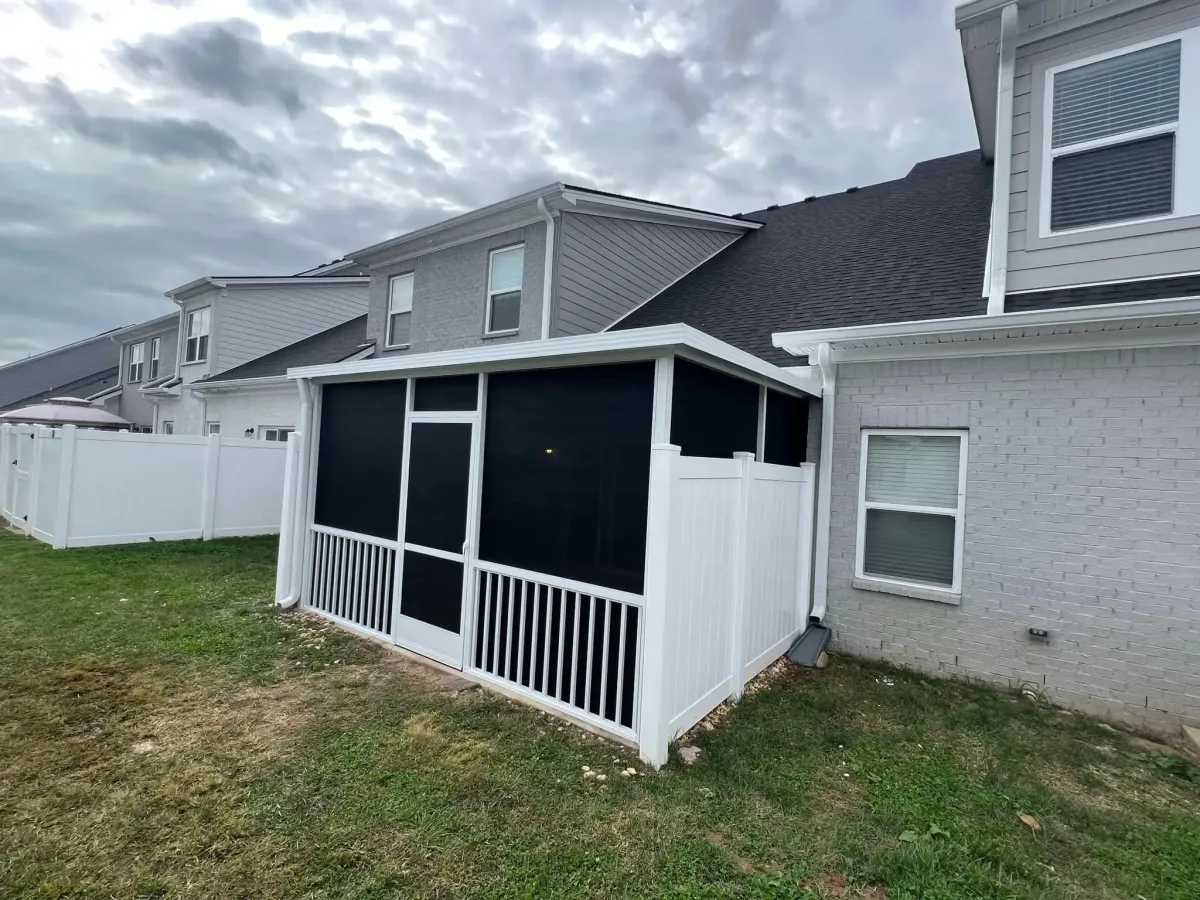
Patio Cover Types Comparison Guide | JBS Enclosures
The five main patio cover types are insulated aluminum, wood, lattice, louvered, and solid roof. Each one performs differently, looks different, and holds up differently in Belle Meade's climate so the right choice depends on how you want to use the space, how much maintenance you're willing to do, and how long you need it to last. This patio cover types comparison guide breaks down every option so you can make that call before you call a contractor.
At JB’s Enclosures, we've spent over 20 years building custom patio covers throughout Belle Meade and Middle Tennessee. We're a veteran-owned company no subcontractors, no pre-fab kits, no guesswork. Every cover we build is designed around your home, your yard, and Tennessee's specific weather demands. That's the perspective behind everything in this guide.
Key Takeaways
Aluminum is the top performer. Won't rot, warp, or need repainting in Tennessee's humid climate.
Insulated panels reduce heat significantly. Foam-core aluminum can lower patio temperatures by up to 15°F in summer.
Wood needs regular upkeep. Without sealing every two to three years, wood degrades fast in Middle Tennessee.
Louvered covers are the most versatile. Adjustable slats let you control sun, shade, and rain in real time.
Permits are required. Davidson County requires a building permit for any permanent patio cover addition.
What Is a Patio Cover — and Why Does Type Matter?
A patio cover is any permanent overhead structure that protects your patio from sun, rain, and debris. But the term covers a wide range from a basic lattice shade structure to a fully insulated aluminum roof to a motorized louvered pergola. The type you choose determines how comfortable the space is in July, how much maintenance you're doing in five years, and whether it looks like part of your home or bolted on as an afterthought. In Belle Meade, where curb appeal matters, that distinction carries real weight.
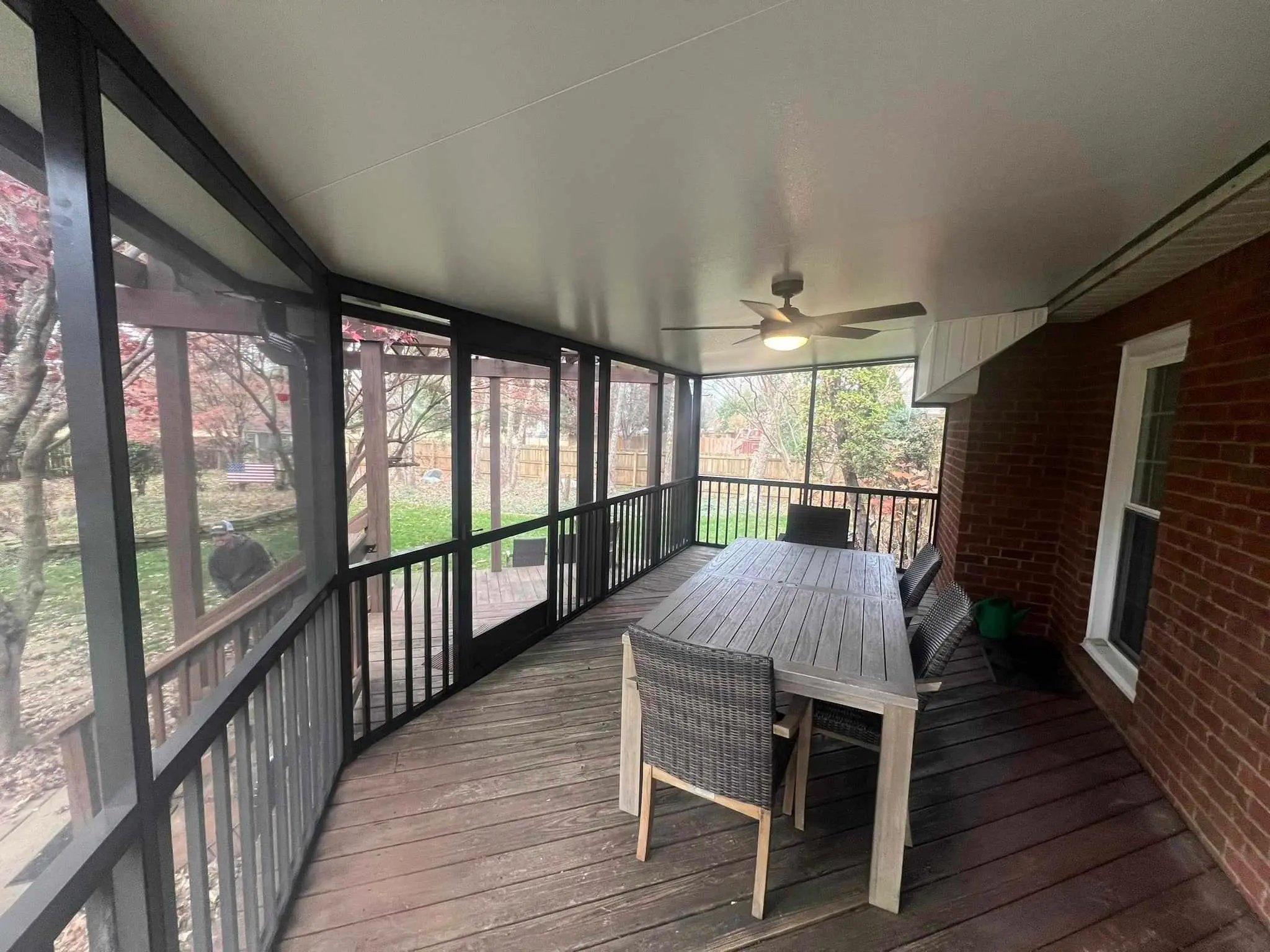
The Main Patio Cover Types: A Full Breakdown
Insulated Aluminum Patio Covers
If one type dominates the Tennessee market, it's insulated aluminum. Panels use a polystyrene foam core between two aluminum sheets like a thermos for your patio roof. The result blocks radiant heat, sheds rain completely, muffles rain noise, and asks almost nothing of you in return. West-facing patios in Belle Meade can become unusable by mid-afternoon in July without proper insulation overhead. An insulated cover handles that along with humidity, storm season, and occasional freezes all without repainting or replacing warped panels.
The one trade-off: it blocks the sky entirely. If you want filtered light or an open feel, look at lattice or louvered instead.
Wood Patio Covers
Wood still has a place particularly for homes with traditional or craftsman architecture where natural material character is part of the point. Cedar and redwood resist rot and insects better than pressure-treated pine and can be stained or painted to match your home exactly.
The honest reality in Tennessee: wood demands real maintenance. Sealing or staining every two to three years is not optional it's the difference between a cover that lasts 20 years and one that starts cracking in seven. If you love the look but not the upkeep, wood-look aluminum panels with deep-embossed grain textures give you the aesthetic without the work.
Aluminum Patio Cover vs Wood Patio Cover: The Key Differences
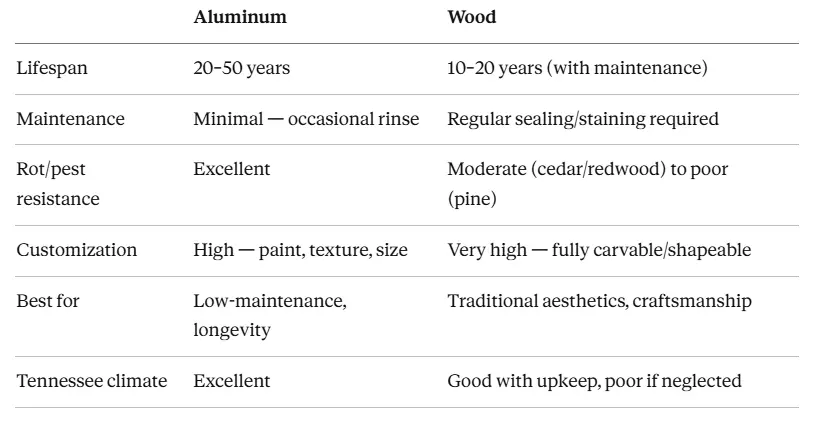
When comparing aluminum patio cover vs wood patio cover, aluminum wins on practicality. Wood wins on traditional character. Your call depends on how much you value one over the other.
Lattice Patio Covers
Lattice uses an open grid of slats that let partial sunlight through. It defines the space, provides filtered shade, and gives climbing plants something to work with. A well-built lattice cover can look genuinely elegant on a Belle Meade garden patio.
What it doesn't do: keep the rain out. Lattice provides no rain protection whatsoever. In Middle Tennessee, where afternoon storms roll in fast and hard, a lattice cover alone won't keep you outside when the sky opens up. It works best as an accent structure or paired with a solid or insulated section for primary coverage.
Louvered Patio Covers
Louvered covers use adjustable aluminum slats that rotate to control sunlight, shade, and airflow. Close them for rain protection. Open them for direct sun. Angle them for filtered light and breeze. Most motorized systems include integrated gutters in the posts and wind sensors that close automatically in a gust. It's the most adaptable type on this list — the only one that responds to conditions in real time. The trade-off is complexity; motorized versions need occasional mechanical attention.
Solid Roof Covers (Non-Insulated)
A non-insulated solid roof gives complete rain and sun protection at a simpler entry point. Practical and effective — but radiant heat still transfers through, which can make the space uncomfortable on a peak Belle Meade summer day. Polycarbonate panels (clear or tinted rigid plastic) let natural light through while blocking UV and rain, useful over garden areas or walkways where brightness matters.
What Is the Best Material for a Patio Cover in Tennessee?
Aluminum, for most situations. It doesn't rot, warp, or need repainting, and powder-coated finishes keep maintenance minimal year after year. Wood is the right call for specific high-end builds where natural character matters most. For everyday use across Belle Meade's climate, aluminum in either an insulated solid or louvered configuration gives you the best combination of longevity, comfort, and low maintenance.
Attached vs. Freestanding
Most Belle Meade homeowners go attached connected to the home's exterior wall on one side, supported by posts on the other. It integrates with your roofline and creates a natural indoor-to-outdoor flow. Freestanding covers sit independently and offer more placement flexibility, but require their own structural foundation. Either way, a building permit from Metro Nashville's Department of Codes and Building Safety is required before work begins in Davidson County.
How to Choose the Right One for Your Home
A few direct questions make this much clearer:
Use the space for regular dining and entertaining? You need full rain protection. Garden accent area? Lattice may be enough. Want minimal maintenance? Aluminum. Love the look of real wood and don't mind the upkeep? Wood is worth it. Need year-round use? Go insulated or louvered. Seasonal only? A non-insulated solid cover does the job. The cover should always look like it was always part of the house not added later.
Explore More From JB’S Enclosures
Screen Rooms — If you want bug protection alongside shade and rain coverage, a screen room adds full enclosure to everything a patio cover offers.
Belle Meade Outdoor Living — See how JB’s Enclosures builds custom patio covers specifically for Belle Meade properties and their architectural character.
Frequently Asked Questions
1. What is the best mate
rial for a patio cover in Tennessee?
Aluminum. It handles Tennessee's heat, humidity, and storm season without rotting, warping, or needing repainting. Insulated aluminum keeps the space noticeably cooler in summer. Wood is a strong option for high-end custom builds where natural character matters, but requires consistent maintenance to survive long-term in this climate.
2. What are the main patio cover types for Belle Meade homes?
The main types are insulated aluminum, non-insulated solid roof, wood, lattice, louvered, and polycarbonate. Insulated aluminum provides the best all-weather performance. Louvered covers offer the most flexibility. Lattice provides filtered shade but no rain protection. Wood offers natural warmth but demands regular upkeep in Tennessee's humidity.
3. What is the difference between aluminum patio cover vs wood patio cover?
Aluminum requires minimal upkeep, resists rot and pests entirely, and lasts 20 to 50 years. Wood needs sealing or staining every two to three years in Tennessee's climate, is susceptible to rot if neglected, and typically lasts 10 to 20 years with proper care. Aluminum spans larger distances without support columns. Wood offers more traditional warmth and full customization in shape and finish.
4. Do I need a permit to build a patio cover in Belle Meade, TN?
Yes. Any permanent patio cover in Davidson County requires a building permit from Metro Nashville's Department of Codes and Building Safety. A licensed contractor handles the application and all required inspections. Building without a permit creates complications at resale and may require structural corrections.
5. How long does a patio cover last in Tennessee?
A quality insulated aluminum cover lasts 30 to 50 years with minimal maintenance. Wood lasts 10 to 20 years with regular upkeep. Aluminum lattice outlasts wood lattice significantly in Tennessee's humidity. Longevity comes down to material choice and installation quality.
6. Can a patio cover be converted into a screen room later?
Yes, if it was built with that upgrade in mind. A cover with structural framing designed to accept screen wall panels can be enclosed into a screen room at a later stage. Bring it up at the design stage planning for a future conversion upfront is significantly less work and expense than retrofitting a structure that wasn't built for it.
7. What patio cover type works best for full rain protection in Tennessee?
A solid insulated aluminum roof cover. The solid panels shed water completely, the insulated core manages heat transfer, and aluminum doesn't degrade in Middle Tennessee's frequent rain and humidity. Louvered covers with the louvers fully closed also provide complete rain protection with the benefit of being fully openable on clear days. Lattice provides no rain protection at all.
Conclusion
The right patio cover types comparison guide decision for your Belle Meade home comes down to three things: how you want to use the space, how much maintenance you're willing to commit to, and how long you need it to last. Insulated aluminum covers the most ground for most homeowners. Louvered systems add year-round adaptability. Wood is the right call for traditional character when properly maintained. Lattice works as an accent, not a primary cover. The framework is here the next step is a conversation about your specific home.
Get Your Free Estimate From JB’S Enclosures
JB’s Enclosures is a veteran-owned, Tennessee-based builder with over 20 years of experience designing and installing custom patio covers throughout Belle Meade and Middle Tennessee. Every project starts with a free on-site estimate, no ballpark figures over the phone, no pre-fab kits, no subcontractors.
Contact JB’s Enclosures today for your free estimate. Or call us directly at 615-713-7902.
