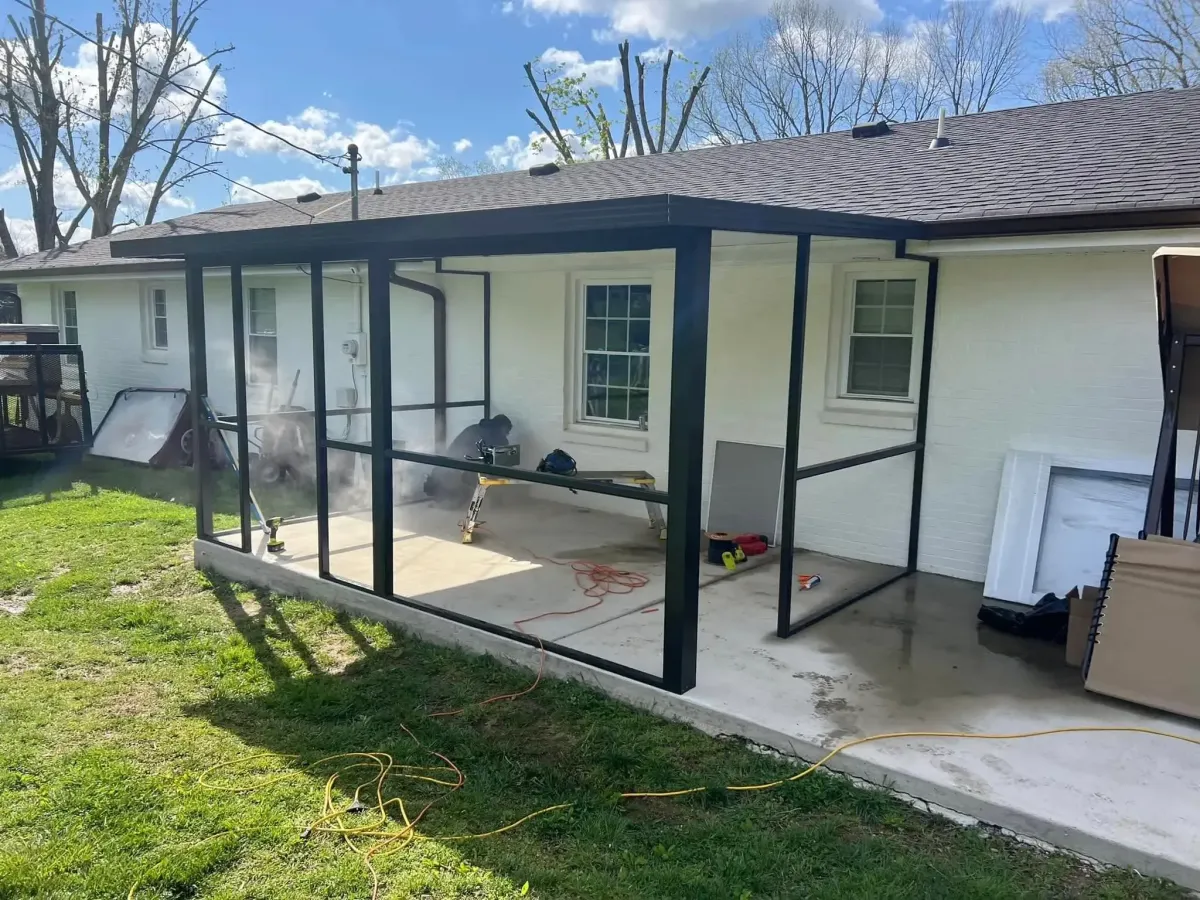
Is an Aluminum Patio Cover Better Than Wood? A Complete Comparison Guide for Tennessee Homeowners
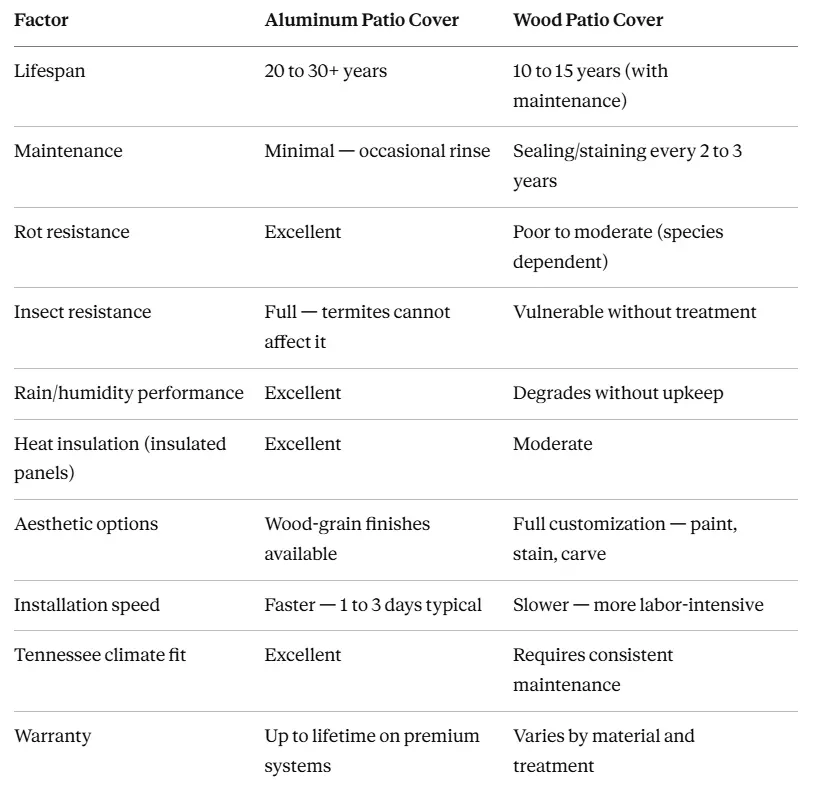
For most Tennessee homeowners, an aluminum patio cover outperforms a wood patio cover in durability, maintenance, and long-term value. Aluminum resists rot, warping, insects, and humidity without any upkeep beyond an occasional rinse. Wood offers natural warmth and design flexibility but requires sealing or staining every 2 to 3 years to survive Middle Tennessee's climate — and even then, it typically lasts 10 to 15 years compared to aluminum's 20 to 30-plus year lifespan, according to AAA Sun Control.
JB's Enclosures, founded by veteran Jeremy Bolton and based in Murfreesboro, has built custom patio covers for homeowners across Middle Tennessee for over 20 years. We serve Nashville, Franklin, Brentwood, Hendersonville, Spring Hill, Smyrna, Nolensville, Mt. Juliet, Madison, Belle Meade, and Shelbyville. Every build is custom. No subcontractors. No pre-fab kits.
What Is the Best Material for a Patio Cover?
Aluminum is the best material for a patio cover in most Tennessee climates. It handles humidity, UV exposure, and heavy rain without deteriorating, and it requires virtually no maintenance beyond occasional cleaning. Wood is the better choice when natural aesthetics and design flexibility matter more than longevity or low maintenance. The right answer depends on your priorities — and Tennessee's climate should be part of that decision.
Here is how the two materials stack up across the factors that matter most to Middle Tennessee homeowners.
Full Comparison at a Glance
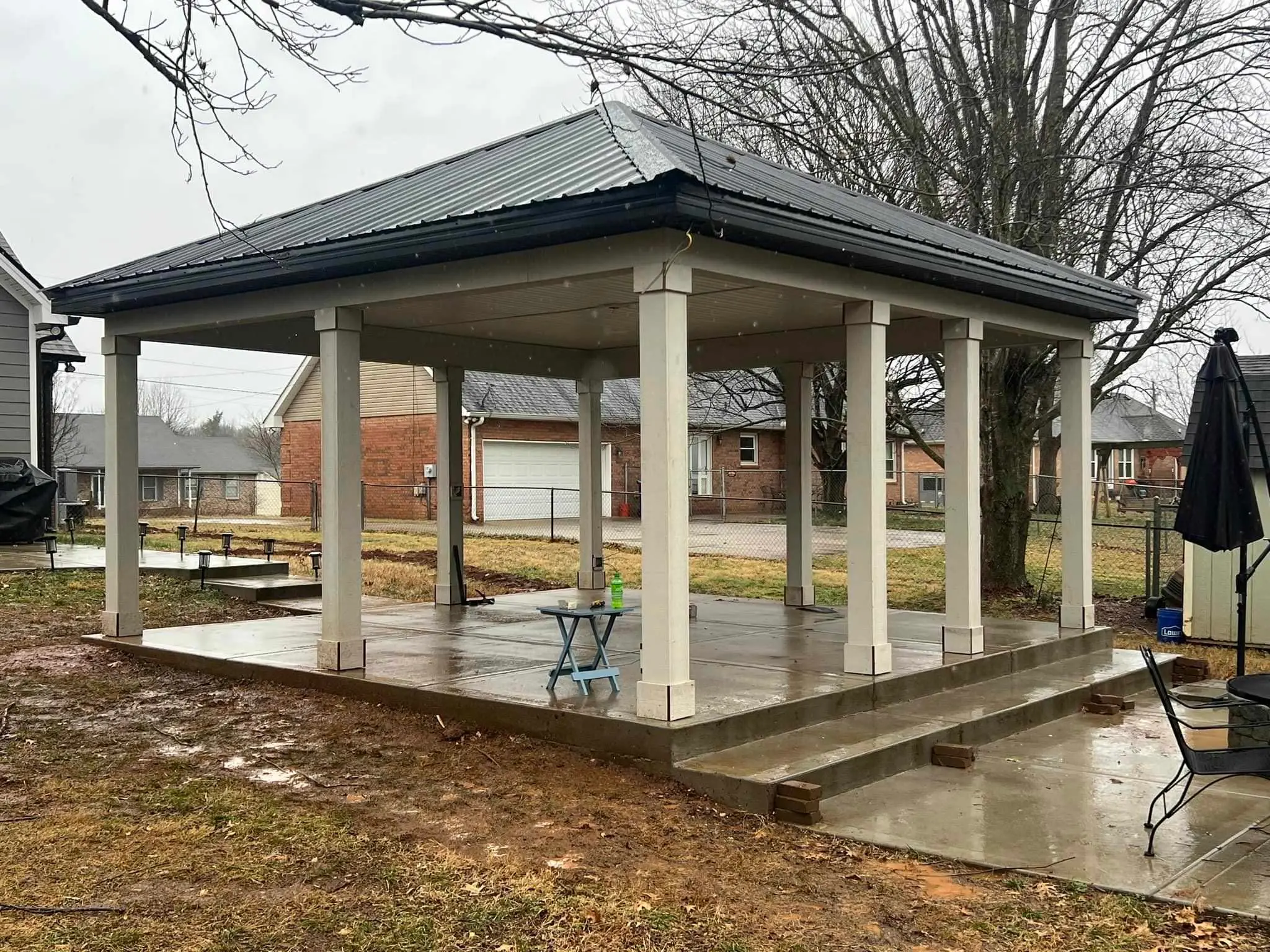
Aluminum Patio Cover Complete Guide: What You Need to Know
An aluminum patio cover is a permanent structure built from extruded aluminum framing with aluminum panel roofing. Two main roof configurations exist: solid insulated panels that use a foam core to block heat and rain completely, and lattice or shade bar designs that let filtered light through. Modern aluminum covers come in powder-coated finishes — including textured wood-grain options — so you're not stuck with a purely industrial look.
Why Aluminum Performs So Well in Tennessee
Middle Tennessee's climate is unforgiving for anything that needs regular upkeep. Summers run hot and humid from May through September. Afternoon storms are frequent. Winters bring occasional hard freezes. And termites — a real problem in Rutherford, Davidson, and Williamson counties — can silently devastate untreated wood in just a few years.
Aluminum absorbs none of that. It doesn't swell with moisture, doesn't attract insects, and doesn't crack under temperature swings. Insulated panels drop the temperature under the cover noticeably on a hot afternoon. For homeowners with west-facing patios in Hendersonville, Smyrna, and Spring Hill, that matters more than it sounds.
Aluminum Cover Types Available in Middle Tennessee
Solid insulated panels — Full rain protection, maximum heat blocking. The most popular choice for JB's Enclosures customers across Middle Tennessee.
Lattice or shade bar — Partial light and airflow. No rain protection. Better for garden areas or secondary structures.
Louvered aluminum systems — Motorized slats that rotate open or closed. Maximum versatility, higher investment.
Wood-grain textured aluminum — Mimics natural wood visually. Same durability as standard aluminum.
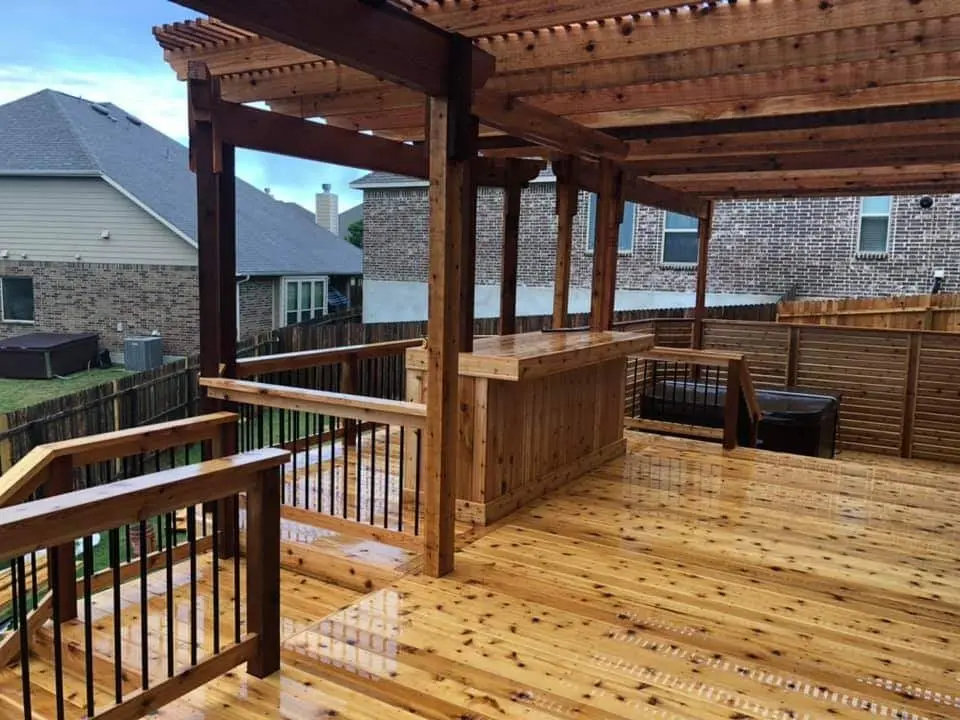
What to Know About a Wood Patio Cover in Tennessee
A wood patio cover uses timber framing to create an overhead shade structure. Cedar and redwood perform best in humid climates — both resist rot and insects better than pressure-treated pine. A well-built cedar cover looks genuinely beautiful and can be stained, painted, or carved to match your home's architecture in ways aluminum simply can't.
But here's the honest reality: wood in Middle Tennessee requires real maintenance. Not "check on it once a year" maintenance — active, scheduled upkeep every 2 to 3 years. Skip a few seasons and you'll see it in cracking, darkening, and soft spots where moisture has gotten in. Most wood covers JB's Enclosures has been asked to replace were neglected for 3 to 5 years. That's not a long time for a busy homeowner.
When Wood Is the Right Call
The home's architecture is traditional or craftsman and natural wood fits it better than aluminum
You genuinely enjoy maintaining the structure — and you'll actually follow through
Design flexibility matters: custom shapes, carved details, unique staining
A one-of-a-kind look matters more than longevity
For homes in Belle Meade and Franklin where architectural character drives property value, a high-end wood cover built and maintained properly is a legitimate choice.
Aluminum Patio Cover vs Wood Patio Cover: How They Handle Tennessee's Conditions
Abstract durability data matters less than how each material actually behaves in your backyard. Here's what Middle Tennessee's specific conditions mean for each one.
Humidity and Rain
Tennessee averages around 50 inches of rainfall per year — well above the national average of 38 inches — with summer humidity regularly pushing heat index readings above 100°F, according to NOAA climate data for the Southeast. Any wood that isn't consistently sealed absorbs moisture every time it rains. Aluminum sheds the same rain with no absorption, no swelling, and no long-term damage.
Termites
Middle Tennessee falls in Zone 1 of the USDA termite infestation probability map — the highest risk category. Cedar and redwood resist termites better than pine, but their natural oils diminish over time. Aluminum has no organic material. There's no level of termite activity that affects it.
UV Exposure
Tennessee's long summers mean extended UV load from May through October. Untreated wood bleaches, grays, and develops surface cracks under sustained UV exposure. Quality aluminum covers with powder-coated finishes carry UV warranties of 10 to 20 years on the finish itself.
Maintenance Comparison: What You're Actually Committing To
This is the practical question most homeowners skip. Be honest with yourself before you choose.
Aluminum patio cover: Rinse with a hose once or twice a year to clear pollen and debris. Inspect hardware every 2 to 3 years. That's genuinely it — about 30 to 60 minutes per year.
Wood patio cover: Sand and reapply stain or sealant every 2 to 3 years. Inspect for soft spots and insect evidence annually. Repaint every 4 to 6 years if painted. Replace damaged boards as they deteriorate. Total time per year averaged out: 4 to 8 hours, plus material costs.
Neither is wrong. They reflect two different relationships with a structure. One asks almost nothing. The other asks for recurring time and money. Which one matches how you actually live matters more than which one looks better on paper.
Ready to Choose Your Patio Cover Material?
Schedule your free on-site estimate with JB's Enclosures today, or call us at 615-713-7902. Our veteran-owned crew serves homeowners across Middle Tennessee with custom aluminum and wood patio cover builds — no subcontractors, no shortcuts.
Who Should Choose an Aluminum Patio Cover?
Choose aluminum if low maintenance is a priority, you're in a west or south-facing location that takes hard afternoon sun, termites are a concern in your area (they should be in Middle Tennessee), or you want a structure that lasts 20 to 30-plus years without recurring upkeep. That describes most homeowners across Murfreesboro, Nashville, and Brentwood.
Who Should Choose a Wood Patio Cover?
Choose wood if your home's architecture genuinely calls for natural materials, you're committed to scheduled maintenance and will follow through, design flexibility matters more than longevity, or you want a custom look that aluminum can't replicate. If all of that describes you, a well-built cedar cover is a legitimate choice.
Explore More From JB's Enclosures
Custom Patio Cover Installation Tennessee — See the full range of aluminum and custom patio cover options JB's Enclosures builds for Middle Tennessee homeowners.
Screen Room and Patio Cover Services — Browse all outdoor living services available across Murfreesboro, Nashville, Brentwood, Franklin, and surrounding communities.
Frequently Asked Questions
1. How long does an aluminum patio cover last compared to wood?
An aluminum patio cover typically lasts 20 to 30 years or more, according to AAA Sun Control and Pacific Pavers. A wood patio cover lasts 10 to 15 years with consistent maintenance. In Tennessee's humid climate, wood that goes unsealed for even 2 to 3 seasons can begin to deteriorate noticeably, shortening that lifespan further.
2. Is an aluminum patio cover worth it in Tennessee?
Yes. In Middle Tennessee's hot, humid summers and high-termite-risk environment, aluminum consistently outperforms wood over the life of the structure. You get a longer-lasting, lower-maintenance cover that handles the climate without requiring annual upkeep. The higher upfront investment in a quality aluminum system is typically recovered in avoided maintenance costs within the first 5 to 7 years.
3. Can aluminum patio covers look like wood?
Yes. Modern aluminum covers use powder-coated finishes with deep-embossed wood-grain textures that closely mimic cedar or redwood. Brands like Alumawood are specifically designed to deliver the visual warmth of natural wood with none of the maintenance requirements.
4. Do wood patio covers attract termites in Tennessee?
Untreated wood and even pressure-treated wood carry termite risk in Middle Tennessee, which falls in Zone 1 of the USDA termite infestation probability map — the highest risk category. Cedar and redwood have natural oils that resist termites better than pine, but those oils diminish over time. Aluminum has no organic material and is completely unaffected by termites regardless of the infestation level in the surrounding environment.
5. What wood is best for a patio cover in Tennessee?
Cedar is the best wood species for a patio cover in Tennessee. It resists rot and insects better than pressure-treated pine, takes stain and paint well, and holds up in humid conditions longer than most other softwoods. Clear heart cedar — the premium grade without knots — is the strongest and most durable option. Redwood performs similarly to cedar but is less commonly available in Middle Tennessee and typically runs higher in cost.
6. Does aluminum or wood add more value to a home in Tennessee?
Both materials add value, but in different ways. A quality aluminum patio cover adds functional outdoor living space that is highly appealing to buyers in the Middle Tennessee market. A well-maintained wood cover adds natural warmth and custom character. In general, aluminum covers hold their value better over time because they don't deteriorate the way wood does — a neglected wood cover can become a liab
ility rather than an asset at the point of sale.
The Bottom Line on Aluminum vs. Wood Patio Covers in Tennessee
Aluminum patio cover vs wood patio cover comes down to this: aluminum wins on performance, longevity, and low maintenance in Tennessee's climate. Wood wins on natural aesthetics and design flexibility for homeowners committed to regular upkeep. For most Middle Tennessee homeowners — particularly those in Murfreesboro, Nashville, Franklin, and Brentwood — aluminum is the smarter long-term investment.
Sources
AAA Sun Control, "Aluminum vs. Wood Patio Covers: Why Aluminum is the Smarter Choice," https://www.aaasuncontrol.com/aluminum-vs-wood-patio-covers-why-aluminum-is-the-smarter-choice/
NOAA National Centers for Environmental Information, "Climate at a Glance — Regional Time Series," https://www.ncei.noaa.gov/access/monitoring/climate-at-a-glance/regional/time-series
Tennessee Department of Commerce and Insurance, "Residential Building Permits — TCA Section 68-120-101," https://www.tn.gov/commerce/fire/residential-permits.html
