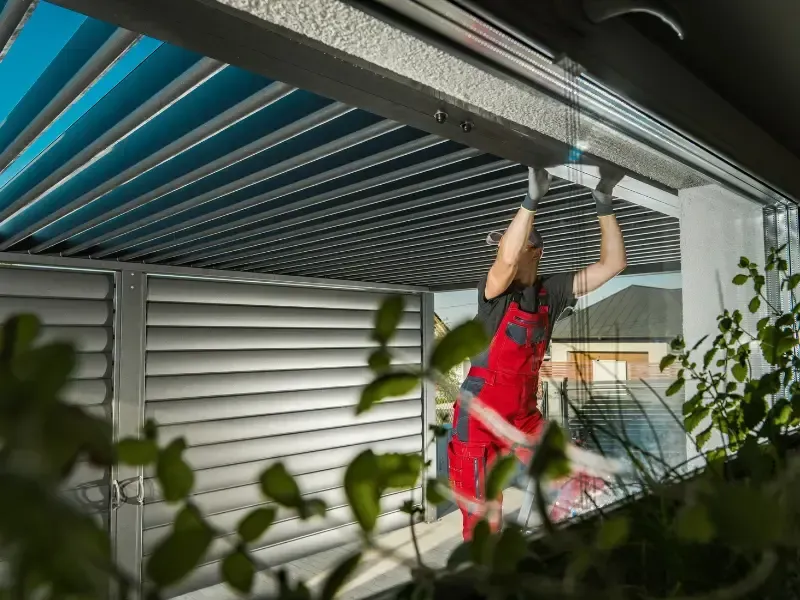
What Is a Metal Carport in Nashville?
A metal carport is a steel-framed vehicle shelter, usually shipped as a kit — and in Nashville the question that matters is whether the kit is certified to local design loads, because a non-certified unit generally cannot be permitted as delivered. JB's Enclosures installs metal carports in Nashville, and gauge and anchoring decide how long one lasts.
By Jeremy Bolton, Founder and Owner · Last updated August 10, 2026
What Is a Metal Carport?
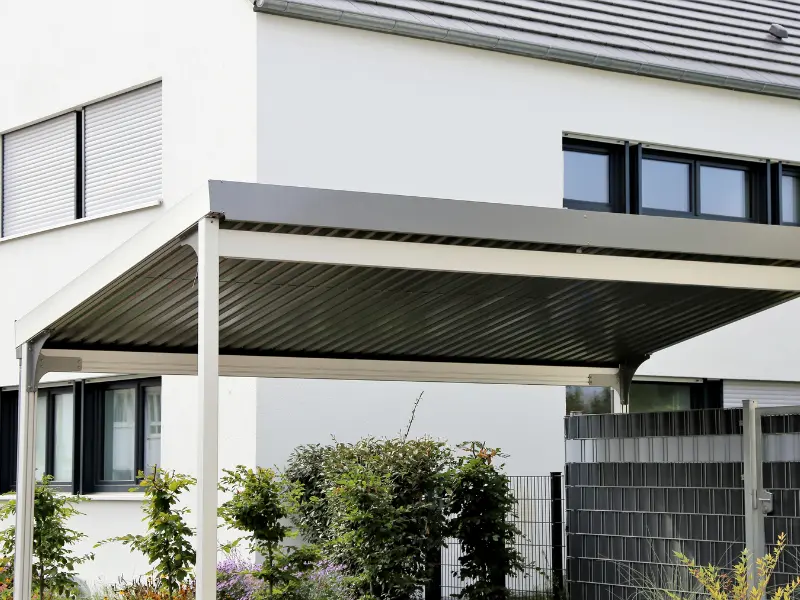
The straightforward answer to what is a metal carport is a roofed vehicle shelter built from galvanised steel tubing with steel roof panels, open on some or all sides. Most arrive as a prefab metal carport kit in standard widths and lengths, and most are installed in a day.
Three variables define what you are actually buying, and they are worth separating because catalogue listings blur them:
Roof style. Regular roof has rounded corners and horizontal panels — the cheapest and the least good at shedding water and debris. A-frame horizontal has a peaked roof with horizontal panels. A-frame vertical has a peaked roof with panels running from ridge to eave, which is what you want in Middle Tennessee, because vertical panels shed rain and leaf litter instead of trapping them at the laps.
Frame gauge. Covered below, and more consequential than any other single spec.
Certification. Covered next, and it decides whether you can permit the structure at all.
A metal car shelter is also not the same product as a custom-built one. If matching your house, working around setbacks, or attaching to the existing roofline matters, our guide to custom carports in Nashville covers that route and the Metro setback thresholds that shape it. If you are still deciding between an open shelter and an enclosed building, our carport versus garage comparison is the place to start.
Certified vs Non-Certified: The Distinction That Decides Permitting
This is the single most important thing to understand before you buy a kit, and it is rarely explained at point of sale.
Metal carport manufacturers typically offer the same structure in two versions. A certified unit is engineered to specified wind and snow loads and comes with stamped engineering documentation. A non-certified unit is the same visible product at a lower price, sold without that documentation and often with language stating it is not intended for permitted installation.
Metro Nashville requires a permit for a detached carport as an accessory structure — carports are named explicitly in the Department of Codes and Building Safety's accessory structure permitting instructions, and zoning examiners review use, setback, footprint, and height against your parcel's zoning. A plans reviewer needs documentation showing the structure will carry the loads the code requires. A non-certified kit does not come with that, which means either paying an engineer to produce stamped drawings for it afterwards — often enough to erase the price advantage — or not permitting the structure, which creates problems at resale and with insurance.
There is a second layer. Certification is to specified loads, and those loads have to match the jurisdiction. Metro amends the residential code's climatic and geographic design criteria table with its own values for wind speed, snow load, frost depth, and related figures. A kit certified to a generic rating is not automatically certified to Nashville's. Get the actual design figures from Metro Codes and check them against the manufacturer's certification before you order — not after the kit is in your driveway.
Gauge and Coating: The Two Specs Nobody Checks
Two numbers separate a carport that lasts twenty-five years from one that looks tired in eight, and neither appears in most advertising.
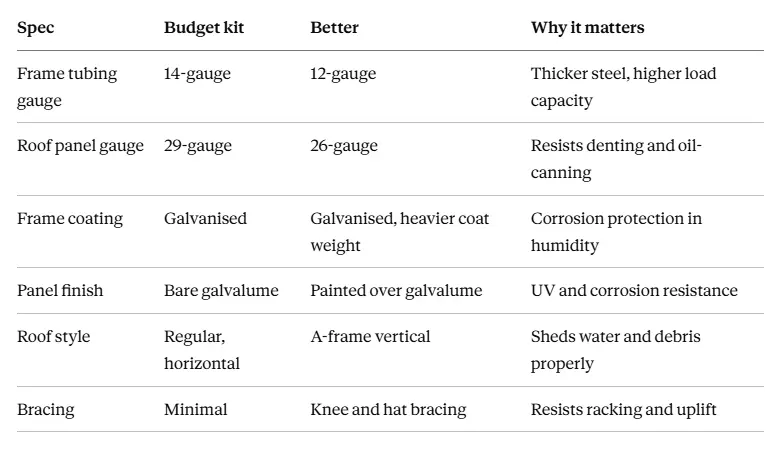
Gauge is counterintuitive: lower numbers mean thicker steel. Twelve-gauge tubing is meaningfully heavier than fourteen, and it is usually the difference between a certified and non-certified unit in the same product line. On roof panels, twenty-six gauge resists denting better than twenty-nine.
Coating matters more here than in a dry climate. Middle Tennessee humidity works on steel continuously, and the vulnerable places are not the flat panels — they are cut edges, drilled holes, and fastener penetrations, where the protective coating was breached during fabrication or installation. That is one genuine argument for a professional steel carport install over a weekend assembly: edges get treated and fasteners get sealed rather than left raw.
On brands: searches for the best metal carport brands 2026 return affiliate lists that shuffle with commission rates. The specifications above are a better filter than any brand name, and one additional question beats all of them — who installs and warranties it locally? A national manufacturer's warranty administered from three states away is worth considerably less than an installer who will come back.
Can a Metal Carport Be Anchored to Concrete?
Yes, and this is where more metal carports fail than anywhere else, so it deserves detail.
Anchoring has to match both the substrate and the load. Into concrete, that means wedge or expansion anchors sized for the base plate and torqued properly. Into asphalt, longer asphalt anchors. Into bare ground, auger-style anchors, which are the weakest option and the one most commonly supplied with budget kits.
Three things go wrong.
Uplift, not weight, is the governing load. A carport is open on all sides, so wind gets underneath the roof plane and pushes up. The anchors are working in tension, resisting being pulled out — which is a completely different demand from holding a heavy object down. A structure that feels immovably solid can still lift in a straight-line wind event if the anchors were sized for gravity.
Existing slabs are an unknown. A patio or driveway slab poured for foot traffic or a parked car may be thinner and less reinforced than an anchor needs. You do not know the thickness until you drill it. Anchoring into a slab that turns out to be three inches of unreinforced concrete gives you an anchor with very little to hold.
Edge distance is real. Setting an anchor too close to the edge of a slab can spall the concrete and drastically reduce holding capacity, sometimes at installation and sometimes months later. Base plates need to sit far enough in from the perimeter, which occasionally means the carport cannot go exactly where you pictured it.
For a permitted installation, expect engineered footings rather than surface anchors into an existing slab — which is the same reason non-certified kits struggle at plan review. If you already have a slab and want to use it, the honest first step is establishing what it actually is.
Metal vs Wood: An Honest Comparison
The useful metal vs wood carport comparison is not about which is better but about which failure mode you would rather manage.
Metal wins on upfront cost, installation speed, maintenance — no refinishing schedule — resistance to rot and termites, and non-combustibility. On a large or rural-edge lot where appearance is secondary and budget is primary, metal is straightforwardly the sensible choice.
Wood wins on matching the house, since roof pitch, materials, and trim can be made to read as part of the building rather than beside it; on attaching cleanly to an existing roofline; on finish options; and on resale impression in neighbourhoods where a bare metal structure looks temporary.
The maintenance trade is not that metal is maintenance-free. Wood needs periodic refinishing on a known schedule. Metal needs almost nothing until a cut edge or fastener penetration starts rusting, and then it needs attention in a specific spot. Different pattern, not absence.
Where this decision gets made for you is overlay districts. In a Neighborhood Conservation or Historic Preservation overlay — much of the older housing in Davidson County — design review will have views about a visible metal structure, and wood or a custom-built alternative is often the only realistic path. Our patio cover and pergola pages cover related structures where the same logic applies, and decks rounds out the exterior range.
Condensation and Hail: The Two Middle Tennessee Drawbacks
Two things about metal that nobody mentions at the point of sale, and both matter here.
Condensation. A bare metal roof panel cools overnight and, on a humid Middle Tennessee morning, water condenses on the underside and drips. Onto your car. It is not a leak, it is physics, and it surprises people badly in their first spring. The fix is a condensation blanket or vapour barrier bonded to the underside of the panels, specified at order time. Retrofitting it means unfastening panels, so decide before you buy.
Hail. Middle Tennessee gets hail, and metal panels dent. A dented panel is cosmetic rather than structural, but a carport bought specifically to protect a vehicle from hail will itself show every stone. Heavier panel gauge helps; nothing eliminates it. This is worth weighing honestly against the reason you are buying.
Neither is a reason to avoid metal. Both are reasons to specify properly and to have realistic expectations, which is a better basis for satisfaction than discovering them in year one.
Cost, Lifespan, and Where Metal Fits in Nashville
On budget, how much does a metal carport cost is driven by footprint, roof style, gauge, whether the unit is certified, and site preparation. A non-certified regular-roof kit on bare ground is the cheapest covered parking available. A certified A-frame vertical unit in twelve-gauge on engineered footings, permitted, costs several times that — and is a different product with a different lifespan. Site prep is the line people forget: levelling, and a slab if you want one, are separate from the kit price. We quote from the site, estimates are free, and financing is available.
On durability, how long do metal carports last comes down to coating integrity and anchoring rather than the steel itself. A properly coated, well-anchored twelve-gauge structure with sealed penetrations can serve twenty-five years or more with minimal attention. A fourteen-gauge unit on auger anchors with raw cut edges may look poor within a decade and is vulnerable in the meantime. The frame outlasts the panels in most cases, and panels can be replaced.
Where metal genuinely fits across Davidson County tracks lot type more than address:
Whites Creek, Joelton, and the northern rural edge — larger lots, fewer neighbours in sight lines, no overlay constraints. Metal makes obvious sense.
Cane Ridge, Antioch, and the southeastern growth areas — newer subdivisions where HOA design standards may restrict metal even where zoning permits it. Check the covenants before the code.
Bellshire and the mid-century northern neighbourhoods — side driveways well suited to a simple metal shelter.
Conservation and historic overlay areas — metal is usually the wrong answer, and a custom-built structure is the realistic route.
We install across the area — see our carports page, our Nashville page, and Brentwood, with the full list on our locations page, completed work in our gallery, and background on our about page.
If you have been searching metal carports Nashville or comparing the best metal carport installers in nashville, three questions sort the field: is the unit certified and to whose design loads, what gauge is the frame, and how is it being anchored? Anyone who answers all three without checking a catalogue knows the product.
Frequently Asked Questions
1. How much do metal carports cost in Nashville?
Cost is driven by footprint, roof style, frame and panel gauge, whether the unit is certified to local design loads, and site preparation. A non-certified regular-roof kit anchored to bare ground is the cheapest covered parking available. A certified A-frame vertical unit in twelve-gauge steel on engineered footings, properly permitted, costs several times that and is a materially different product. Site preparation — levelling and any slab — is separate from the kit price and frequently overlooked.
2. How long do metal carports last?
Coating integrity and anchoring decide it rather than the steel itself. A properly coated, well-anchored twelve-gauge structure with sealed cut edges and fastener penetrations can serve twenty-five years or more with little attention. A fourteen-gauge unit on auger anchors with raw cut edges can look poor within a decade and is more vulnerable in wind events.
3. Do I need a permit for a metal carport in Nashville?
Yes. Metro Nashville names carports explicitly among detached accessory structures requiring a permit through the Department of Codes and Building Safety, with zoning examiners reviewing use, setback, footprint, and height against the parcel's zoning. The complication specific to metal is documentation: a non-certified kit arrives without stamped engineering, so it generally cannot be permitted as delivered.
4. Are metal carports better than wood?
Neither is better outright. Metal wins on upfront cost, install speed, low maintenance, and resistance to rot and termites, making it the sensible choice on larger lots where appearance is secondary. Wood wins on matching the house, attaching cleanly to an existing roofline, finish options, and resale impression where a bare metal structure would look temporary.
5. Can a metal carport be anchored to concrete?
Yes, using wedge or expansion anchors sized for the base plate and properly torqued. Three cautions. Uplift rather than weight is the governing load on an open structure, so anchors work in tension and must be sized for it. An existing patio or driveway slab may be thinner and less reinforced than anchors require, and its thickness is unknown until drilled.
Contact JB's Enclosures
JB's Enclosures 1349 Marymont Dr. Murfreesboro, TN 37129 Phone: (615) 713-7902 Veteran-owned, serving Nashville including Whites Creek, Joelton, Cane Ridge, Bellshire, and Antioch, plus Brentwood and Middle Tennessee.
Comparing kits and not sure what the specs mean? Request a free on-site estimate or call (615) 713-7902, and we will tell you what gauge you are looking at, whether it can be permitted, and how it needs to be anchored.
