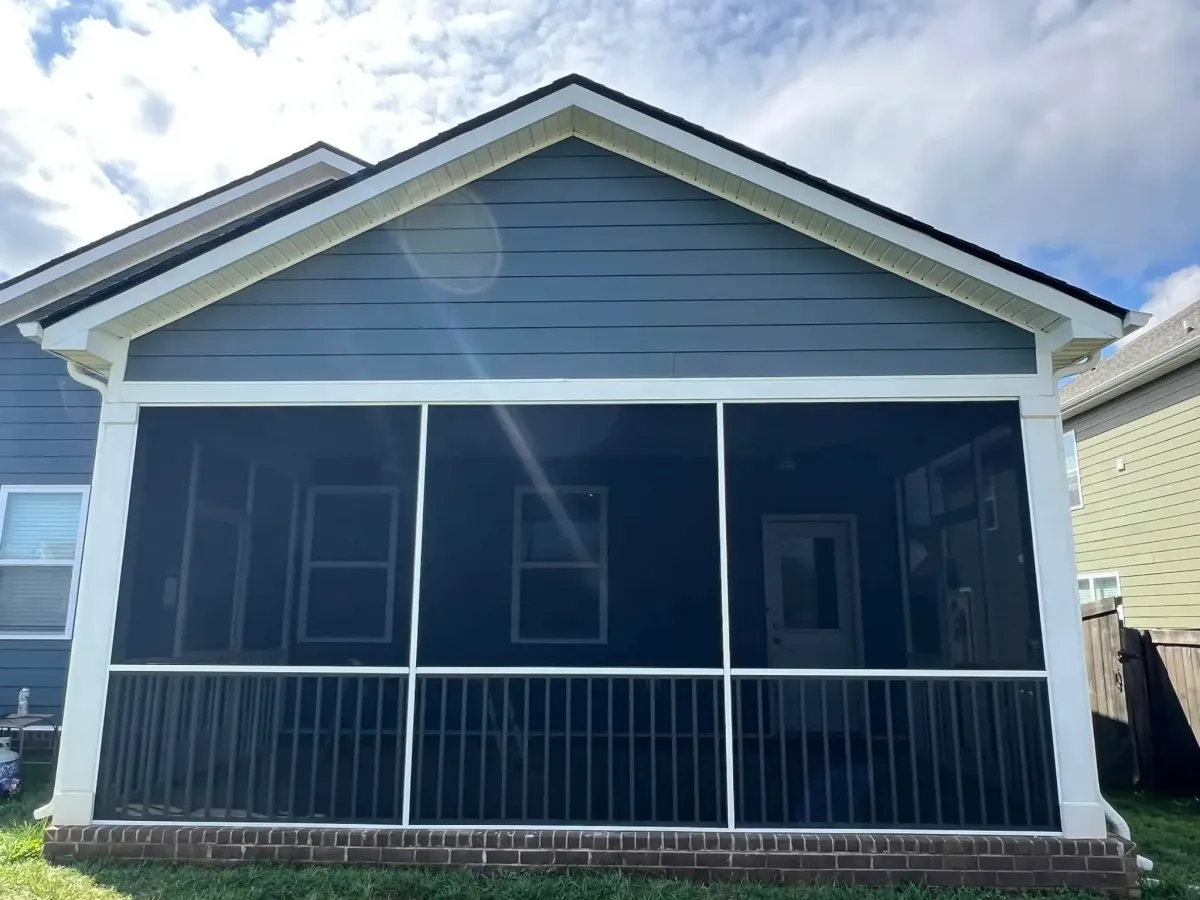
How to Build a Screen Room | JB'S Enclosures
How to build a screen room starts with planning, runs through permitting, foundation, framing, roofing, and finishes with screen installation. Six phases. Each one matters. Skip or rush any of them and you'll feel it later - either in the structure itself or when it's time to sell your home.
At JB’s Enclosures, we've been building custom screen rooms throughout Murfreesboro and Middle Tennessee for over 20 years. We're veteran-owned, we use no subcontractors, and every build is custom-designed around your home and yard. This guide walks through every phase of the process, covers what the screen room permit guide Tennessee actually requires, and tells you where homeowners most often get into trouble.
Key Takeaways
Permits are required. Tennessee law requires building permits for all permanent residential additions before work begins.
Aluminum outperforms wood here. High humidity and frequent rain make wood framing a long-term maintenance problem in Middle Tennessee.
Plan the roof type early. It's the single biggest decision that shapes how the space performs year-round.
DIY carries real risk. Unpermitted builds complicate home sales and may not be covered by homeowner's insurance.
Step 1: Plan First, Build Second
Good planning is where how to build a screen room really starts. You need clear answers to four questions before anything else: Where will it go? How will you use it? What size do you need? And what type of roof do you want?
Location and Orientation
South and west-facing screen rooms in Tennessee take the hardest afternoon sun. Without proper roofing, they become uncomfortable by mid-afternoon in July. East-facing rooms get morning light without the brutal afternoon heat. North-facing rooms stay cooler but feel darker.
Attached screen rooms connect to your home's exterior wall for structural support and a natural indoor-outdoor flow. Freestanding structures sit independently and give you more placement flexibility, but they need their own foundation footings and are more complex to permit.
Size, Use, and Roof Type
Think honestly about how you'll use the space. Entertaining six to eight people regularly needs at least 150 to 200 square feet. A quiet seating area needs less. Build the right size once - extending a screen room that's too small is always more expensive than building it right the first time.
The roof type is the decision that affects everything else. Here are the three main options:
Screen overhead - keeps bugs out but doesn't stop rain. Best for dry climates, not ideal for Tennessee's storm season.
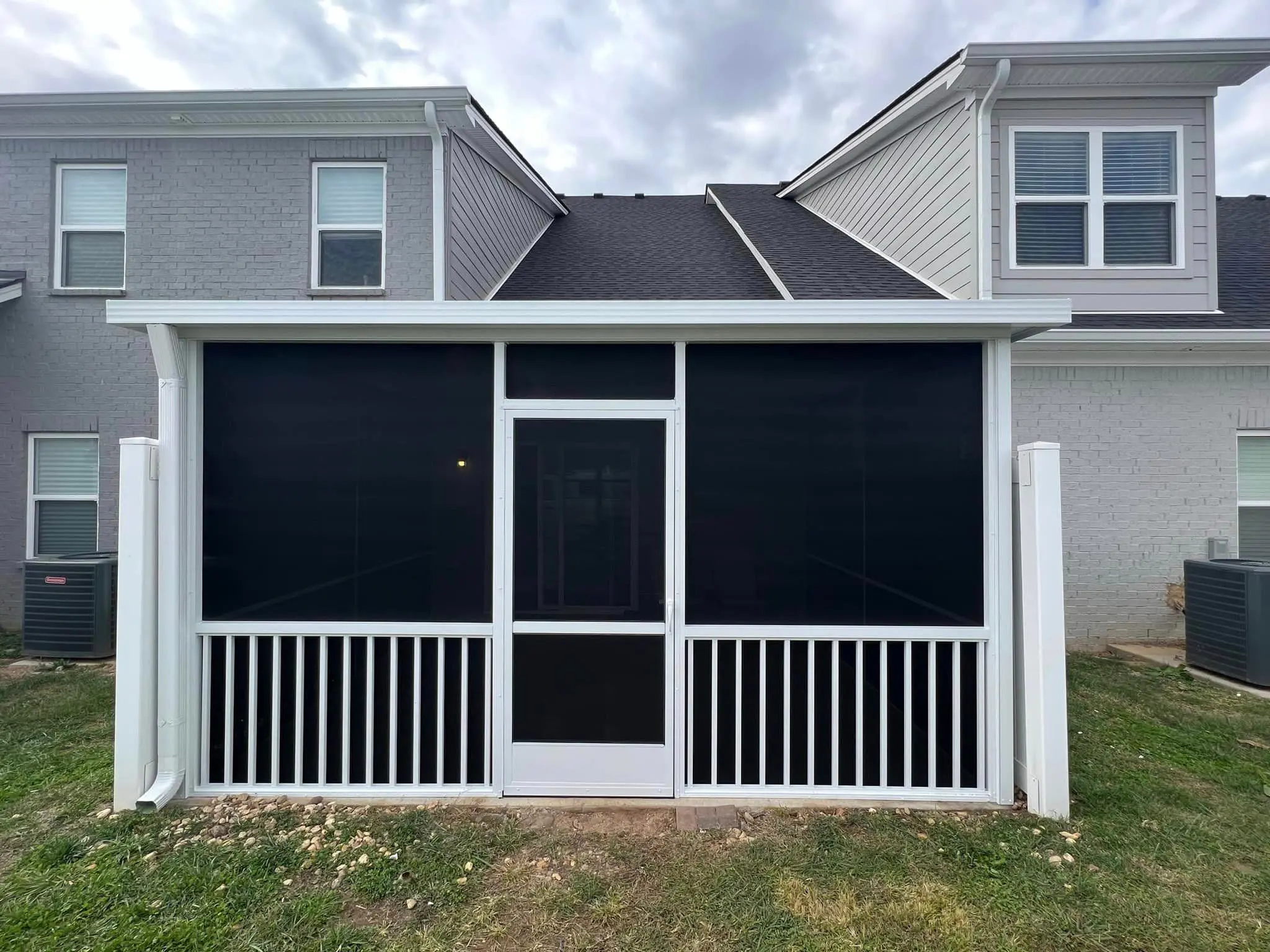
Solid insulated aluminum roof - blocks heat, rain, and noise. The most popular choice in Murfreesboro and Middle Tennessee for good reason.
Shingle-matched roof - blends with your home's existing roofline. The most visually integrated option, and the most involved to build.
Each option has different structural requirements, which is why it belongs in the planning conversation before anything gets drawn up.
Step 2: The Screen Room Permit Guide Tennessee - What You Actually Need
Most homeowners underestimate this step. It's also the one that causes the most expensive problems down the road.
What Permits Do You Need for a Screen Room in Tennessee?
Under TCA Section 68-120-101, Tennessee requires a building permit for any permanent residential addition before work begins. A screen room qualifies. No exceptions based on size or attachment type.
If you're adding ceiling fans, lighting, or electrical outlets, you need a separate electrical permit on top of the building permit. Tennessee operates under the 2018 International Residential Code as the statewide minimum standard, with local counties sometimes applying stricter requirements on top of that.
Permit timelines vary by county. Davidson County runs four to eight weeks. Sumner and Williamson counties typically run three to six weeks. Rural counties often move faster. At JBS Enclosures, we handle every permit application and inspection on your behalf. You don't chase paperwork.
Why Skipping Permits Is a Bad Idea
An unpermitted screen room isn't just a technicality. When you sell your home, the consequences are real:
The buyer's inspector will likely flag the unpermitted structure
You'll face disclosure obligations to the buyer
The structure may need to be brought into compliance or demolished at your expense
Your homeowner's insurance may not cover a structure that was never permitted
Permits take time. They're worth every day.
Step 3: Foundation and Site Preparation
Once permits are approved, the build starts at the foundation. Everything rests on this, and it has to be right before framing begins.
If your home already has a concrete patio slab, it can often serve as the foundation for an attached screen room - provided it's level and structurally sound with no significant cracking or settlement. We evaluate this during the on-site consultation. A cosmetically imperfect slab is usually fine. A slab that's shifted or cracked through may need repair first.
Building on bare ground or on a deck means digging below frost depth, which in Murfreesboro and Middle Tennessee runs 12 to 18 inches. Concrete footings are poured, cured, and then framing begins. Freestanding builds require more work here because there's no home wall to anchor one side.
Step 4: Framing
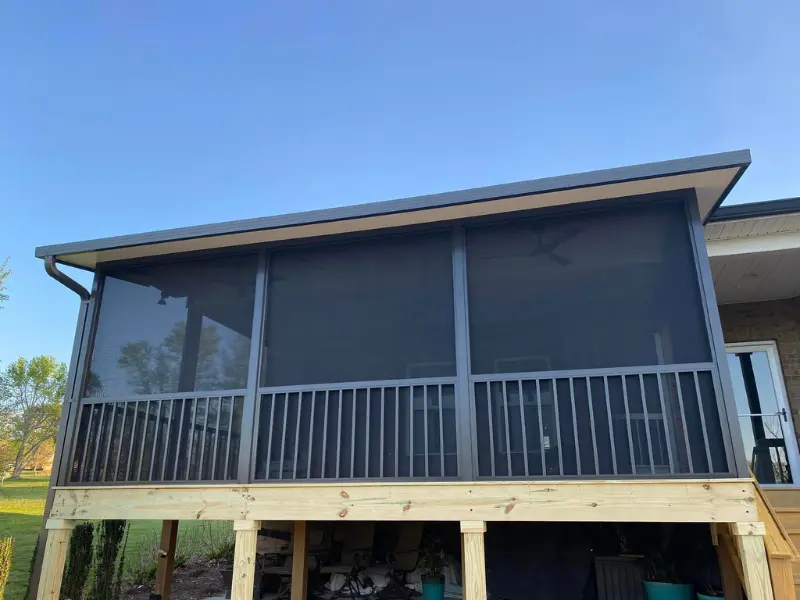
Framing is the skeleton of the structure. It sets the roof pitch, determines where every screen panel and door sits, and carries every load the structure will see over its lifetime.
Why Aluminum Framing Wins in Tennessee
Wood framing in Murfreesboro's high-humidity environment requires real maintenance. Without regular sealing and painting, wood absorbs moisture, expands and contracts with the seasons, and eventually rots. Most screen rooms that need early replacement have wood framing that was neglected for a few years too many.
Aluminum doesn't have these problems. Here's why it's the right call in Tennessee:
Rust-resistant and doesn't absorb moisture
Requires no painting or sealing - ever
Holds its structural integrity through heat, humidity, and freeze-thaw cycles
Uses extruded channels built specifically for screen room applications, not adapted from general construction materials
For attached screen rooms, the ledger board ties into the home's rim joist or wall framing. That connection needs proper flashing and sealing - water intrusion at the ledger is one of the most common long-term problems in screen room builds, and it's entirely preventable with the right installation.
Step 5: Roofing
The roof goes on before screens. For a solid insulated aluminum roof, panels are cut, set into framing channels, and sealed at every joint and penetration. Gutters tie into your home's existing system or run to a downspout at the corner posts.
For a shingle-matched roof, a traditional deck is framed, sheathed, and shingled. It takes more time and involves roofing-specific work, but the visual result - a screen room that looks like it was always part of the house - is worth it for homes where architectural integration matters.
Step 6: Screen Installation and Finishing
With framing and roof complete, screen panels go into the aluminum channels and get secured with spline. Doors are hung, adjusted for proper swing and latch, and tested. Any electrical rough-in gets inspected before walls close.
Finishing covers the final details:
Trim installation and framing touch-up
Caulking at all exterior penetrations
Hardware inspection on every door and latch
Final walkthrough with the homeowner
At JB’s Enclosures, we walk every panel and test every door with you before we close out the project. If something isn't right, we fix it before we leave.
How to Build a Screen Room: DIY vs. Hiring a Pro
You can build a screen room yourself. But here's what most DIY guides don't tell you: in Tennessee, a DIY build still needs permits. And the permit process requires submitted plans, structural calculations, and someone who knows what the inspector is looking for.
Most homeowners who attempt a DIY screen room underestimate the precision required for aluminum screen channel installation, the complexity of roof framing, and the time permit coordination actually takes. A professional JB’s Enclosures crew typically completes a screen room install in three to seven business days. A first-time DIY build on weekends commonly takes months, often with corrections along the way.
Explore More From JB’S Enclosures
Screen Room Installation in Murfreesboro, TN - See how JB’s Enclosures handles every phase of the build, from permits to final walkthrough, throughout Murfreesboro and Middle Tennessee.
Outdoor Living Services in Murfreesboro, TN - Browse all JB’s Enclosures services available throughout Murfreesboro, Nashville, Hendersonville, Brentwood, Franklin, and surrounding communities.
JBS Enclosures Murfreesboro - Learn more about how JB’s Enclosures serves Murfreesboro homeowners with custom screen rooms, patio covers, and outdoor living solutions.
Frequently Asked Questions
1. How to build a screen room - where do you start?
Start with planning - location, size, roof type, and intended use. Then pull your building permit before any work begins. In Murfreesboro, TN, permits are required for all permanent residential additions under TCA Section 68-120-101.
2. What permits do you need for a screen room in Tennessee?
A building permit at minimum. Add a separate electrical permit if the build includes ceiling fans, lighting, or outlets. Tennessee follows the 2018 International Residential Code statewide. Davidson County runs four to eight weeks for permit approval. Sumner and Williamson counties run three to six weeks.
3. What is the best framing material for a screen room in Murfreesboro, TN?
Aluminum. It doesn't absorb moisture, doesn't need painting, and holds up through decades of Tennessee heat, humidity, and seasonal temperature swings. Wood requires regular sealing and eventually rots if maintenance is skipped.
4. How long does it take to build a screen room in Tennessee?
Three to seven business days of active installation. Add three to eight weeks on the front end for permitting depending on your county. Total timeline from contract to completion is typically four to ten weeks.
5. Can I build a screen room without a permit in Murfreesboro, TN?
No, not without serious consequences. An unpermitted structure gets flagged at home sale, triggers disclosure obligations, and may require demolition or compliance work at your expense. Homeowner's insurance may not cover it either.
6. What is the best screen material for Murfreesboro's climate?
Heavy-duty fiberglass mesh for most applications. Solar screen for west or south-facing exposures where afternoon UV and heat are a problem. Aluminum mesh for maximum durability. All mesh types need replacing every six to eight years with normal use.
7. Does a screen room need a foundation?
Yes. An attached screen room can use an existing concrete patio slab if it's level and structurally sound. Bare ground or deck builds require concrete footings dug 12 to 18 inches below frost depth in Middle Tennessee.
Conclusion
How to build a screen room in Tennessee is a six-step process: plan, permit, prepare the foundation, frame, roof, and install screens. Each step builds on the last. Skipping permitting is the most expensive mistake homeowners make - it shows up at resale when you can least afford it. Aluminum framing and a solid insulated roof aren't premium add-ons here. In Middle Tennessee's climate, they're just the right way to build.
Get Your Free Estimate From JB’S Enclosures
JB’s Enclosures is a veteran-owned, Tennessee-based builder with over 20 years of experience building custom screen rooms throughout Murfreesboro and Middle Tennessee. Every project starts with a free on-site estimate - no ballpark figures over the phone, no pre-fab kits, no subcontractors. We handle every permit, every inspection, and every phase of the build.
Contact JB’s Enclosures today for your free estimate. Or call us directly at 615-713-7902.
