Screen Room vs Sunroom Guide | JB'S Enclosures
A screen room uses mesh walls to keep bugs and debris out while letting fresh air flow freely. A sunroom uses insulated glass walls and can be climate-controlled for year-round use. They are not the same structure, they don't perform the same way, and choosing between them comes down to how you want to use the space and how Nashville's climate will affect that decision.
At JB’s Enclosures, we help Nashville homeowners make this choice every day. This screen room vs sunroom comparison guide covers the structural differences, how each one performs in Middle Tennessee's climate, and exactly which one fits your lifestyle.
Key Takeaways
Not the same structure. A screen room has mesh walls. A sunroom has insulated glass walls.
Screen rooms are seasonal. Best used from spring through fall with full open-air airflow.
Sunrooms are year-round. They connect to your HVAC and add conditioned square footage.
Nashville's climate suits both. Mosquitoes favor screen rooms. Cold months and pollen favor sunrooms.
Both need permits. Davidson County requires building permits for either structure.
What Is the Difference Between a Screen Room and a Sunroom?
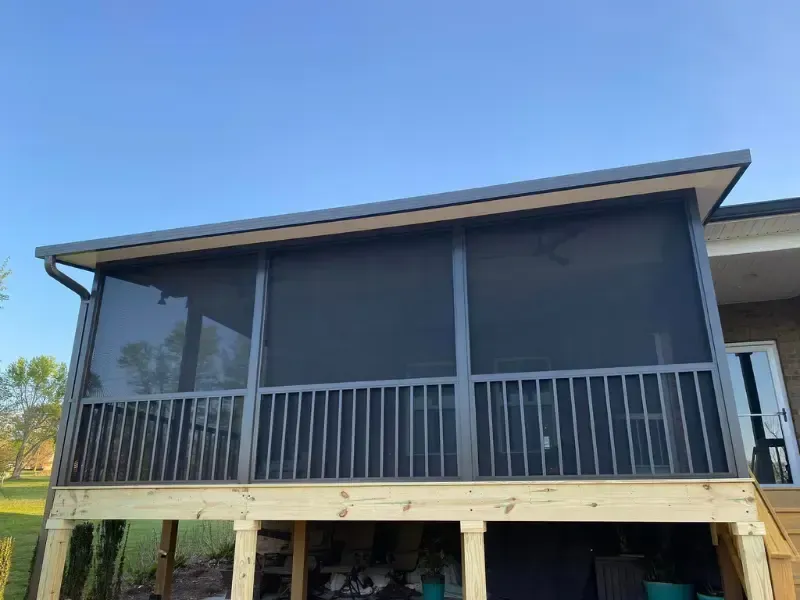
A screen room is an outdoor structure with mesh screen walls, a solid or screened roof, and an aluminum frame. It keeps insects and light rain out while letting fresh air flow freely. You feel the breeze, hear the outdoors, and stay connected to the yard just without the bugs. Most screen rooms attach to the home through an existing patio, deck, or back door.
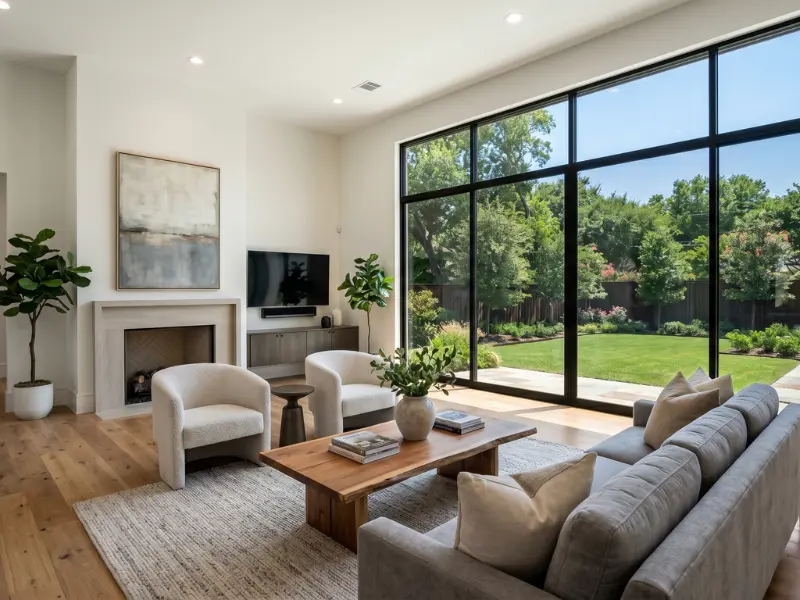
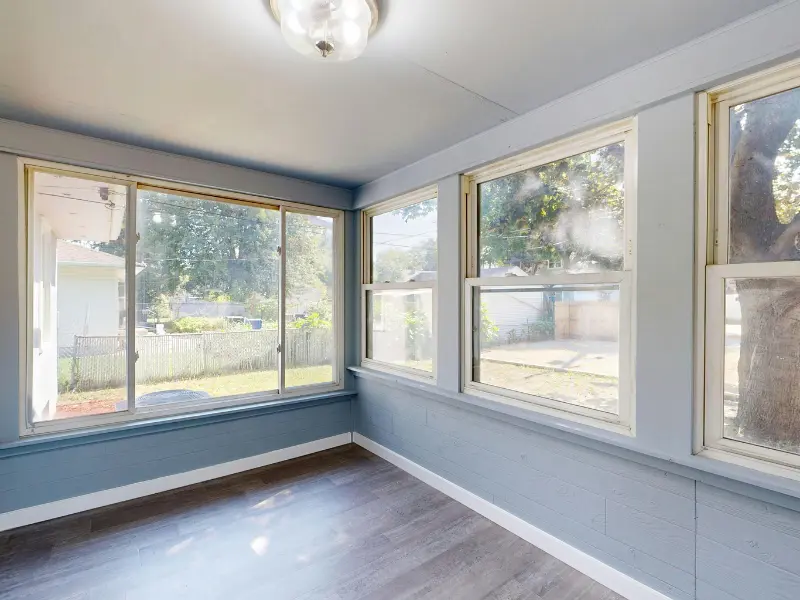
A sunroom is a fully enclosed room with insulated glass walls built to function as interior living space. Four-season sunrooms tie into your home's HVAC and can be used comfortably in a Nashville January. Three-season builds are insulated for most of the year but not extreme cold. Either way, the glass keeps out rain, pollen, bugs, and wind.
So is a screen room the same as a sunroom? No. A screen room is a sophisticated screened porch. A sunroom is a glass-walled room with outdoor views. Both are valuable neither is a substitute for the other.
How Each One Is Built: Key Structural Differences
Screen Room Construction
A screen room typically starts with your existing patio slab or deck. An aluminum frame goes up, the roof is installed, and screen mesh panels are fitted into the walls. The framing doesn't need to meet thermal performance standards since there's no climate control goal but it still needs to handle Tennessee wind loads and roof weight. Worth knowing: some screen rooms are built as upgradable structures with frames engineered to accept glass panels later, which is worth discussing if you think you'll want to convert down the road.
Sunroom Construction
A sunroom is a more substantial build with thicker framing, insulated wall and roof systems, and double-pane or low-E glass. Low-E stands for low-emissivity — it blocks infrared heat while letting visible light through. Four-season sunrooms also require HVAC integration, which adds electrical and ductwork to the scope. This is why sunrooms involve more trades and take longer to complete. According to Family Handyman, sunrooms can require multiple building permits because they're classified as full room additions. For Davidson County, Metro Nashville's Department of Codes and Building Safety requires permits for all permanent residential additions before construction begins.
Screen Room vs Sunroom: A Side-by-Side Comparison
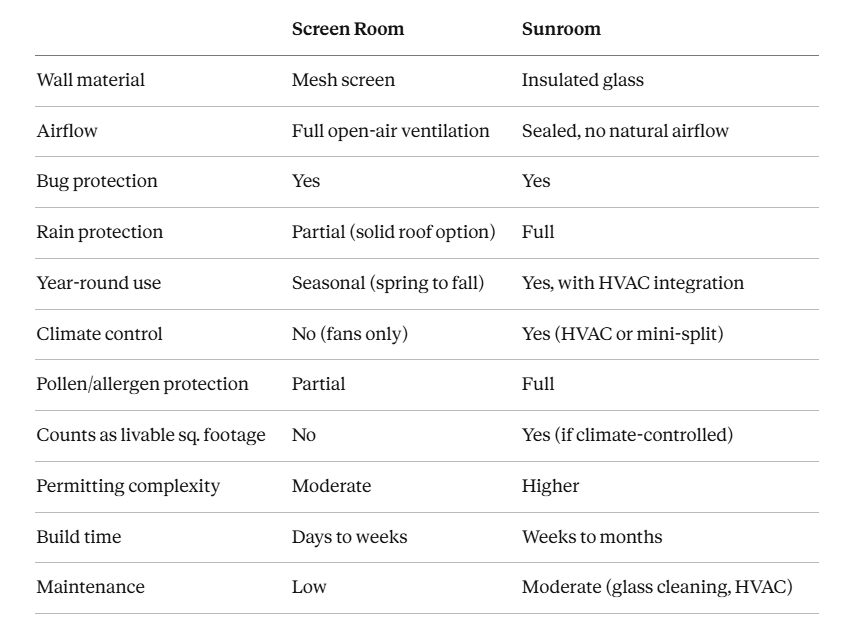
Here's how both structures stack up across the factors Nashville homeowners ask about most.
Which One Works Better in Nashville's Climate?
Nashville's humid subtropical climate brings hot summers, heavy mosquito pressure from April through October, spring and fall pollen seasons, and fast-moving afternoon storms. Both structures are built with this environment in mind but they solve different problems.
Screen rooms win for warm-weather use. An unscreened porch in Nashville from June through September is close to unusable in the evenings. A screen room fixes that. The open airflow also prevents the heat buildup that a glass sunroom can create on a 95°F day if the HVAC isn't sized right.
Sunrooms win for year-round comfort. Nashville's allergy seasons are severe, and a sealed glass sunroom blocks pollen in a way mesh simply can't. For the cold weeks Tennessee does see, a climate-controlled sunroom stays comfortable when a screen room doesn't. Many homeowners start with a screen room and never feel the need to upgrade but if you already know you want year-round use, a sunroom from the start is the smarter choice.
Maintenance: What You're Signing Up For
Screen rooms are easy to maintain. Rinse the mesh panels a couple of times a year, patch any tears, and inspect the door hardware annually. The aluminum frame won't rot, warp, or need repainting. A well-built screen room from JB’s Enclosures holds up for decades with that level of care.
Sunrooms take a bit more. Glass panels need regular cleaning inside and out. If tied into your HVAC, that system needs routine service. According to Pacific Patio, the type of glass used significantly affects long-term thermal performance and how much airborne material enters the space, which is why material selection during the build matters.
How Each One Adds Value — and Who Should Choose Which
A screen room adds functional outdoor living space that Nashville buyers consistently prioritize. A covered, screened space usable eight to nine months of the year is a genuine selling point that makes the home feel larger without the price of a full interior addition.
A sunroom adds conditioned square footage, which factors into appraisals and listings in a way a screen room does not. Industry data from Angi cites sunroom returns on investment at approximately 49%.
Choose a screen room if you want open-air feel, you entertain casually outside, or you have kids and pets who use the backyard regularly. If mosquitoes and afternoon sun are your main complaints, a screen room solves both.
Choose a sunroom if year-round use is the goal. If you want a space that works in January, during a summer storm, and every season between, a sunroom with HVAC delivers that. It's also the better pick for allergy sufferers and anyone who wants true conditioned square footage added to their home.
Explore More From JB’S Enclosures
Still researching your options? These pages go deeper on the specifics:
Screen Rooms in Nashville, TN — Everything Nashville homeowners need to know about screen room types, materials, roof options, and what the build process looks like with JB’s Enclosures.
Patio Covers Nashville — If neither a full screen room nor a sunroom feels like the right fit yet, patio covers are a practical starting point that can often be upgraded later.
Frequently Asked Questions
1. What is the difference between a screen room and a sunroom?
A screen room uses mesh walls to allow airflow while keeping bugs and debris out. A sunroom uses insulated glass walls and can be climate-controlled for year-round use. A screen room feels like you're outside. A sunroom functions like an interior room with outdoor views.
2. Is a screen room the same as a sunroom?
No. A screen room is an open-air enclosure with mesh walls. A sunroom is a sealed glass structure that functions as an interior room. In Nashville, where summers are hot and storms are frequent, the difference in how each one performs is significant.
3. Which is better for Nashville's climate, a screen room or sunroom?
A screen room is better for open-air, warm-weather use from spring through fall. Nashville's mosquito pressure makes screened enclosures especially practical from April through October. A sunroom is better for year-round use, pollen protection, and climate-controlled comfort through Nashville's colder months.
4. Can a screen room be converted into a sunroom later?
Yes, if it was built with that upgrade in mind. An upgradable screen room uses the same frame construction as a sunroom so glass panels can replace mesh screens later. Planning for the conversion at the design stage is significantly less work than retrofitting a frame that was not built for it.
5. Do screen rooms and sunrooms both require permits in Nashville?
Yes. Both require building permits in Davidson County. Sunrooms involve more extensive permitting because they are treated as full home additions with insulation, glass, and potentially HVAC integration. A licensed contractor handles permit applications and inspections on your behalf.
6. Which adds more value to a home, a screen room or a sunroom?
A sunroom adds more appraised value because it adds conditioned square footage to the home. A screen room adds lifestyle value and marketability but does not factor into square footage calculations the same way. Both are strong selling points in the Nashville market.
7. How long does each one take to build?
A screen room takes three to seven business days of active installation, plus one to three weeks for permitting. A sunroom takes longer due to more trades involved and a more complex permitting process. JB’s Enclosures provides a clear project timeline during the free on-site consultation.
Ready to Choose? JB’S Enclosures Can Help.
JB’s Enclosures is a veteran-owned, Tennessee-based builder with 20+ years of experience building custom screen rooms and patio covers throughout Nashville and Middle Tennessee. We don't use subcontractors, we don't sell pre-fab kits, and we don't give ballpark quotes over the phone. Every project starts with a free on-site estimate where we look at your space, listen to what you want, and help you figure out which structure actually fits your home and your life.
Contact JB’s Enclosures today for your free estimate. Or call us directly at (615) 713-7902.
