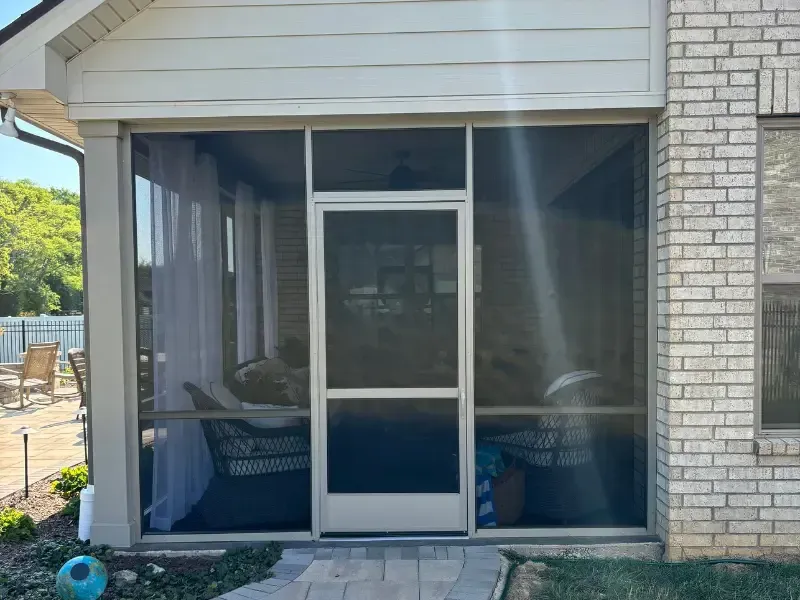
How Much Does Rescreening Cost in Nashville TN?
JB's Enclosures provides professional re screening services Nashville homeowners need when the frame is solid but the mesh has aged out — full-enclosure rescreen patio enclosure work, pool cage rescreen projects, and screen replacement service across Davidson and Rutherford County. Veteran-owned, licensed in Tennessee, and building and restoring screens across Middle Tennessee for over 20 years.
By Jeremy, Owner · Last updated July 2026
What Is a Re-Screening Service?
A re-screening service — sometimes searched as a "re screening service" — is the replacement of worn, sagging, torn, or UV-degraded screen mesh across an existing enclosure frame — without replacing the frame itself. The aluminum or steel frame of a screen enclosure typically lasts 20 to 30 years or more. The mesh inside those frames has a shorter service life, ranging from 8 to 15 years depending on material, sun exposure, and whether pets are in the picture.
When the frame is structurally sound and the mesh is the problem, rescreening is the right solution — significantly more economical than tearing out and rebuilding the entire enclosure. JB's Enclosures removes the old screen material, installs new mesh to the correct tension, and re-splines each panel to a clean, taut finish.
Rescreening applies to several structure types:
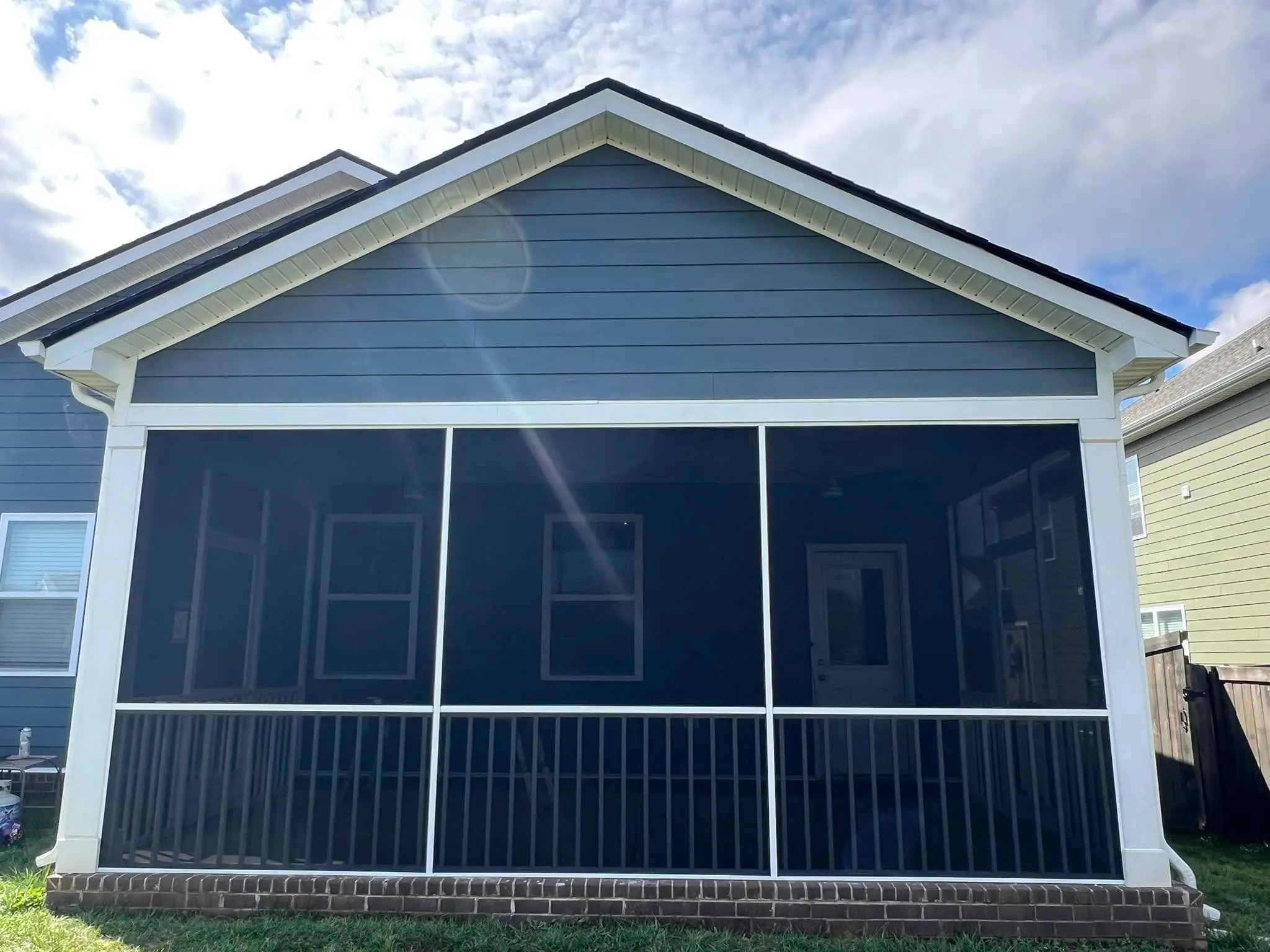
Rescreen patio enclosure — full-perimeter mesh replacement on an existing screened patio or porch structure
Pool cage rescreen — replacing mesh panels on a pool cage or pool screen enclosure, including roof panels and wall sections
Screen room rescreening — full mesh replacement on a screened room that's retained its frame but whose mesh has deteriorated with age
Window screen replacement service — individual or bulk window screen rescreening across a home's exterior windows
How Much Does Re-Screening Cost in Nashville?
We don't publish cost ranges without a verified Nashville-specific source — so how much does re screening cost in practice? It varies by structure size, panel count, mesh material selected, and whether any frame repairs are needed alongside the rescreening. What drives the number on a Nashville rescreening project:
Panel count — the primary variable; a patio enclosure with 12 panels costs proportionally more than one with 6
Panel size — larger pool cage panels and roof sections take more material and more time to tension correctly than standard patio wall panels
Mesh material — standard fiberglass, aluminum mesh, no-see-um, pet screen, and super screen have different material costs; upgrading mesh at rescreen time is common and cost-effective since the labor is the same regardless of material
Frame condition — if frame sections need straightening, corner repair, or hardware replacement alongside the rescreen, that adds to the project scope
Structure type — a flat patio enclosure wall is simpler than a pool cage roof panel at height
Call (615) 713-7902 for a free written estimate. We assess the structure and provide per-project pricing before any work begins.
How Often Should You Re-Screen a Patio Enclosure?
The honest answer to how often should you re screen a patio enclosure depends on the mesh material, the amount of direct sun exposure, and whether pets interact with the screen. Here's a practical guide for Nashville and Middle Tennessee enclosures:
Standard fiberglass mesh: 8 to 12 years under typical conditions. In Nashville's climate — significant UV load in summer, humidity year-round, and spring/fall weather cycling — fiberglass mesh at the lower end of this range is common on south and west-facing exposures. Fiberglass softens under sustained UV and begins to sag and lose its weave integrity before it visibly tears.
Aluminum mesh: 12 to 20 years. Significantly more durable than fiberglass under UV and weather cycling. Aluminum holds its shape and doesn't soften or sag the way fiberglass does. The trade-off is a slightly more metallic appearance and marginally reduced visibility through the screen.
Pet screen: 10 to 15 years with pets. Designed to resist claw punctures and sustained pressure from dogs and cats. Outlasts standard fiberglass significantly in pet-active households.
Super screen / high-visibility mesh: 12 to 20 years. UV-stabilized fiberglass treated for extended weather resistance. Better longevity than standard fiberglass with similar visibility. A common upgrade choice at rescreen time.
No-see-um mesh: 8 to 12 years. Similar lifespan to standard fiberglass; the finer weave means slightly more UV surface area and equivalent durability. Worth the upgrade for Nashville's spring and fall gnat pressure.
Nashville's pool cage structures often need rescreening more frequently than patio enclosures — roof panels experience direct sun from above year-round and accumulate algae and debris that accelerates mesh degradation. Pool cage roof panels on south-facing structures sometimes need rescreening at 7 to 8 years even with standard aluminum mesh.
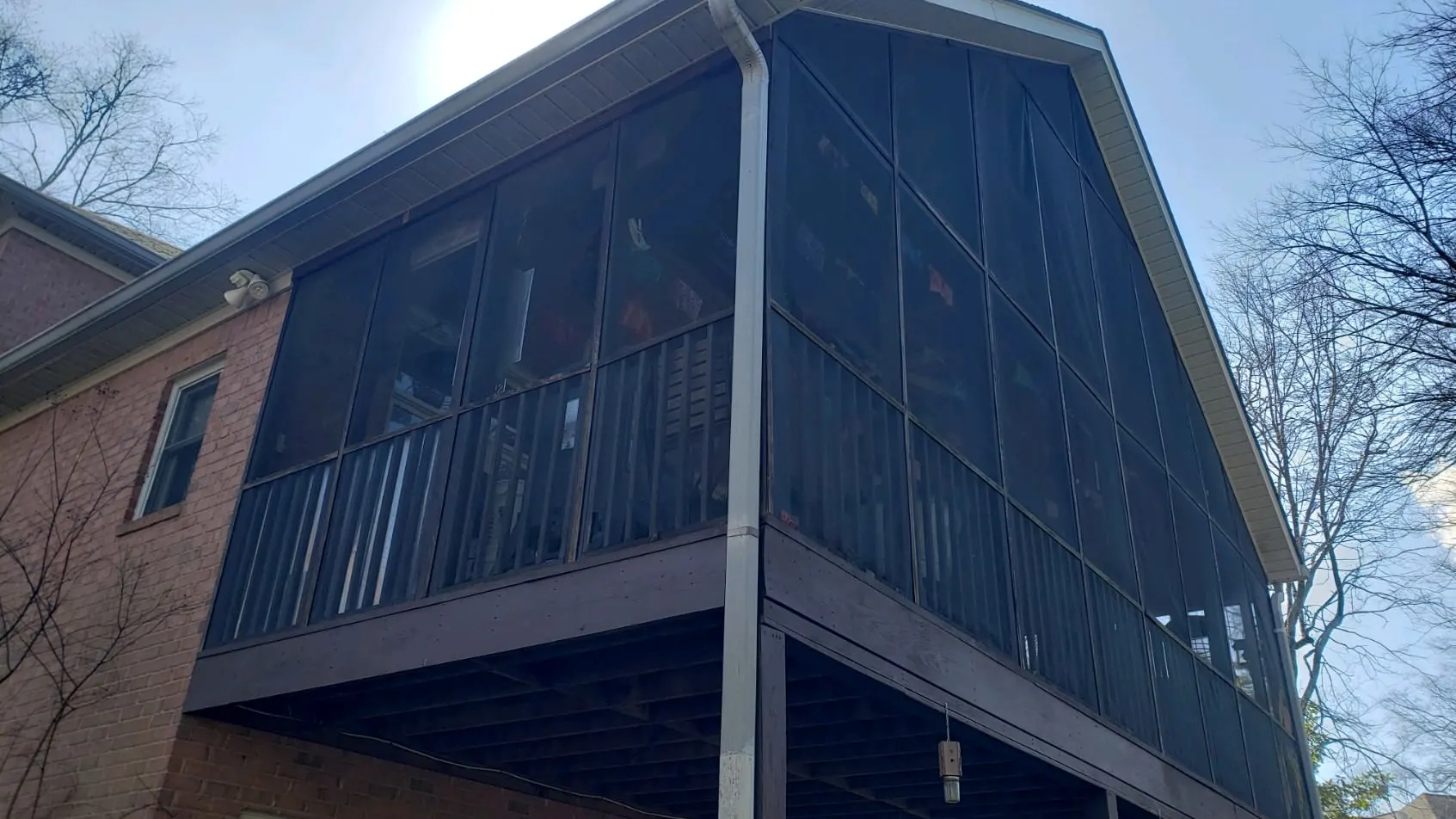
How to Choose Screen Mesh for Rescreening
Rescreen time is the best opportunity to upgrade your mesh — the labor cost is the same whether you install standard fiberglass or a higher-performance material. Here's the guide for Nashville and Middle Tennessee enclosures:

For most Nashville patio enclosures: aluminum mesh or super screen is the best rescreen upgrade — better longevity than standard fiberglass with no meaningful visibility trade-off. The material cost difference over standard fiberglass is small; the durability difference is meaningful when you're paying labor to install it.
For pool cage rescreens: aluminum mesh on wall panels; aluminum mesh or super screen on roof panels where direct sun is most intense. Standard fiberglass on pool cage roof panels is a short-term economy.
For enclosures with gnat pressure: no-see-um mesh on the sections where you spend time in the evenings. Nashville's spring (April–May) and fall (September–October) gnat pressure is real enough that the finer weave is a quality-of-life upgrade worth having.
Rescreening vs New Enclosure Cost Comparison
This is the decision that matters most financially — whether rescreening the existing structure is the right call or whether a new enclosure makes more sense.
Rescreen the existing structure when:
The frame is structurally sound — no significant corrosion, no bent or failed frame members, no footings or anchors that have shifted
The enclosure geometry is still what you want — same size, same configuration, same roof type
The frame is relatively recent (under 15 years) and has remaining service life ahead of it
Consider a new enclosure when:
The frame has significant corrosion, multiple bent sections, or structural members that have failed
The original enclosure design no longer fits your needs — you want to expand the footprint, change the roof type, or add sections
The frame is 20-plus years old and approaching the end of its structural service life — rescreening gives you new mesh on an aging frame that will need replacement within a few years anyway
The rescreening vs new enclosure cost comparison almost always favors rescreening when the frame is sound. A full new enclosure installation costs significantly more than mesh replacement alone — the difference is the aluminum frame, the footings or anchors, and the full installation labor. Rescreening delivers the fresh-screen result at a fraction of that cost.
For Nashville properties where the frame is borderline, we assess and give you a straight recommendation at the estimate walkthrough — rescreen if the frame supports it, new build if it doesn't.
How Long Does a Re-Screening Project Take?
Most Nashville rescreening projects complete in one to two days on-site depending on the panel count and structure type:
Single patio enclosure (6–12 panels) — typically one day on-site
Larger screen room or pool cage (12–20+ panels) — one to two days
Pool cage with roof panels — add half a day for roof panel access and tensioning
Total project timeline from first call to completed rescreen is typically one to two weeks — most of that is scheduling and material sourcing. We don't require a permit for standard rescreening work in Davidson County or Rutherford County; If frame repairs are needed alongside the rescreen, we assess whether that scope triggers a permit requirement at the estimate walkthrough.
Tennessee requires an active contractor license through the Tennessee Department of Commerce & Insurance for enclosure work involving frame replacement. JB's Enclosures is a licensed Tennessee contractor.
Can I Re-Screen Only the Damaged Sections?
Yes — section-by-section rescreening is possible and sometimes the right call. But there's an important practical consideration before deciding.
When partial rescreening makes sense:
The damage is isolated — one or two panels on an otherwise sound and recently installed enclosure
The existing mesh is relatively new (under 5 years old) and the rest of the enclosure is in good condition
The damaged section uses the same mesh type you'd be replacing it with, so the new panel matches the surrounding panels in color and weave
When full rescreening is the better call:
The existing mesh is 8-plus years old across the whole enclosure — replacing two panels now means rescreening the rest in two to three years anyway; doing it all at once is more economical and produces a consistent result
The mesh material has faded or changed color with UV exposure — new panels in the original mesh color will be visibly brighter than the surrounding aged panels, creating a patchwork appearance
You're upgrading mesh material — if you're moving from standard fiberglass to aluminum mesh or super screen, doing it across the whole enclosure at once makes sense
The best re screening services in Nashville give you a straight recommendation on this — partial rescreen when it makes sense, full rescreen when the economics point there. JB's Enclosures will tell you which is the right call for your specific structure at the estimate walkthrough.
Best Re-Screening Services in Nashville: Why JB's Enclosures
JB's Enclosures brings the same knowledge and tooling to a rescreen call that we bring to new enclosure builds — because rescreening is the same craft as new installation, just without the frame work.
Full mesh inventory on every rescreen call — fiberglass, aluminum, no-see-um, pet screen, and super screen; you pick the material upgrade at estimate time
We rescreen enclosures we didn't build — no limitation to our own installed structures
Pool cage rescreens including roof panels — height access and roof panel tensioning are standard for us, not a specialty request
Written estimates before work starts — per-project pricing scoped to your specific panel count and mesh selection
Licensed Tennessee contractor — verifiable at the Tennessee Department of Commerce & Insurance
For Rutherford County properties, see our screen rooms Murfreesboro guide for the full range of enclosure services in our home market.
Frequently Asked Questions
1. How much do re-screening services cost in Nashville?
Rescreening cost varies by panel count, panel size, mesh material, and whether frame repairs are needed. JB's Enclosures provides free written estimates scoped to your specific structure — call (615) 713-7902. Upgrading mesh material at rescreen time adds modest material cost with no additional labor charge.
2. How often should I re-screen my patio or pool enclosure?
Standard fiberglass mesh: 8 to 12 years. Aluminum mesh and super screen: 12 to 20 years. Pet screen: 10 to 15 years. Pool cage roof panels often need rescreening sooner than wall panels due to direct UV exposure — 7 to 8 years is common on south-facing structures with standard mesh.
3. What is the best mesh for rescreening?
For most Nashville patio enclosures, aluminum mesh or super screen is the best upgrade — better durability than standard fiberglass with no significant visibility trade-off. For pool cage roof panels, aluminum mesh performs best under sustained direct sun. For households with pets, pet screen is worth the upgrade. For gnat pressure, no-see-um mesh on the sections where you spend evenings.
4. How long does a re-screening project take?
Single patio enclosures (6–12 panels) typically complete in one day on-site. Larger screen rooms and pool cages (12–20+ panels) take one to two days. Total project timeline from first call to completed rescreen is one to two weeks. Standard rescreening doesn't require a permit in Davidson or Rutherford County.
5. Can I re-screen only the damaged sections?
Yes — when the damage is isolated, the existing mesh is relatively new, and new panels will match the surrounding mesh in color and material. Full rescreening is the better call when the existing mesh is 8-plus years old, when the mesh has faded unevenly, or when you're upgrading material across the enclosure. JB's Enclosures gives you a straight recommendation at the estimate walkthrough.
Schedule Re-Screening Services in Nashville
Whether you need to rescreen a patio enclosure, a pool cage, or a full screen room, JB's Enclosures delivers written estimates and same-week scheduling across Middle Tennessee.
Request a Free Estimate or call (615) 713-7902 today.
Related services:
Contact JB's Enclosures
JB's Enclosures 1349 Marymont Dr Murfreesboro, TN 37129 Phone: (615) 713-7902 Email: [email protected]
Serving Nashville, Brentwood, Franklin, Murfreesboro, Smyrna, Hermitage, Antioch, La Vergne, and all of Davidson and Rutherford County, TN.
