What Is a Multi Level Deck, and Does It Suit Your Yard?
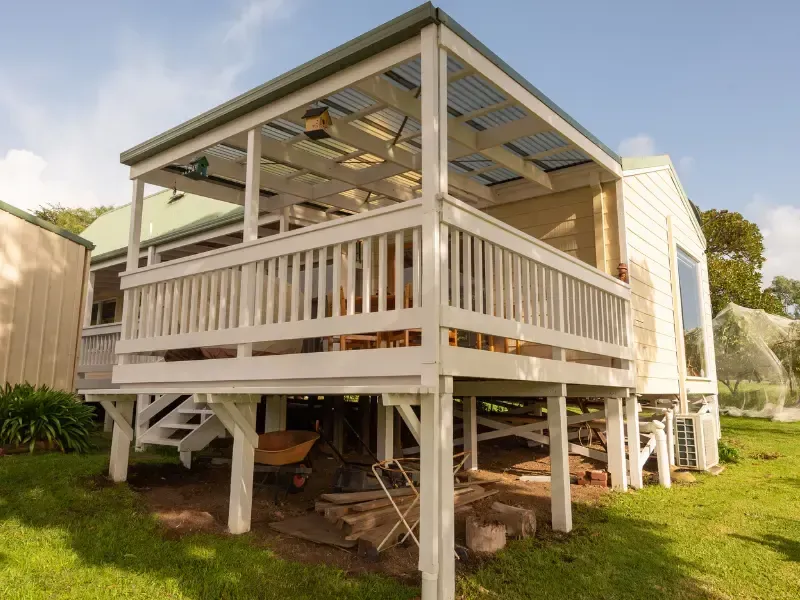
A multi level deck is two or more platforms at different heights, connected by steps. On a sloped Smyrna lot it usually costs less to build than one big deck at door height, and the reason comes down to a single number in the code: thirty inches.
By Jeremy Bolton, Founder and Owner · Last updated August 12, 2026
What Is a Multi Level Deck?
Ask what is a multi level deck and you'll get a design answer. The more useful answer is structural.
Every deck has to get from your back door down to the yard. One platform at door height means tall posts, big footings, and guard around the whole perimeter. Step down in stages instead and you get shorter posts, smaller footings, and less guard. Same square footage, less structure holding it up. Levels aren't a styling choice on a slope; they're how you avoid building a tower.
On terminology, there's no code difference between a multi level deck and a tiered deck. "Tiered" tends to mean levels stepping down with the grade, while "multi level" gets used more loosely for platforms at different heights doing different jobs. A split level deck Middle Tennessee homeowners describe is usually the first. Don't pay extra for the vocabulary.
The 30-Inch Line That Decides the Budget
Here's the number that quietly sets your price.
Under the residential code Tennessee has adopted, a walking surface more than 30 inches above the grade below needs a guard, and that guard has to be at least 36 inches tall. At or under 30 inches, no guard is required. The measurement is taken at any point within 36 inches horizontally of the edge, so a deck that's low on one side and high on another still needs guard where it's high.
Now apply that to a stepped deck. Where you put the level breaks decides how much guard you buy.
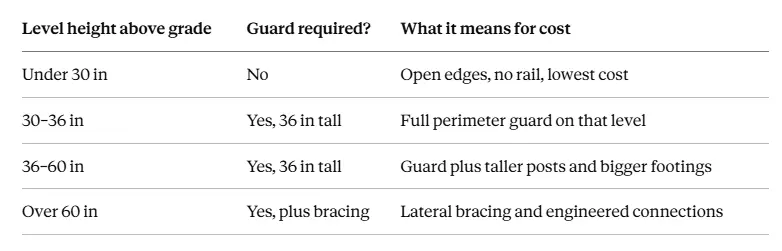
A lower platform at 28 inches needs no guard. Push it to 32 for a rounder number and you've bought guard around its whole perimeter. That's a design decision, not a code one.
So laying out levels isn't just following the grade — it's finding where a platform can sit under thirty inches. Anyone quoting two tier deck contractors Rutherford County homeowners compare should tell you each level's height off grade before pricing. Smyrna publishes its adopted codes and local modifications through its Building Safety department, and towns do amend the model code.
Stairs: Where the Cost Compounds
Every level change needs steps, and steps carry their own thresholds.
A flight with four or more risers needs a graspable handrail on at least one side, 34 to 38 inches above the tread nosings. Three risers doesn't. That's another line worth designing around, because a handrail means posts, a rail, and a return at each end.
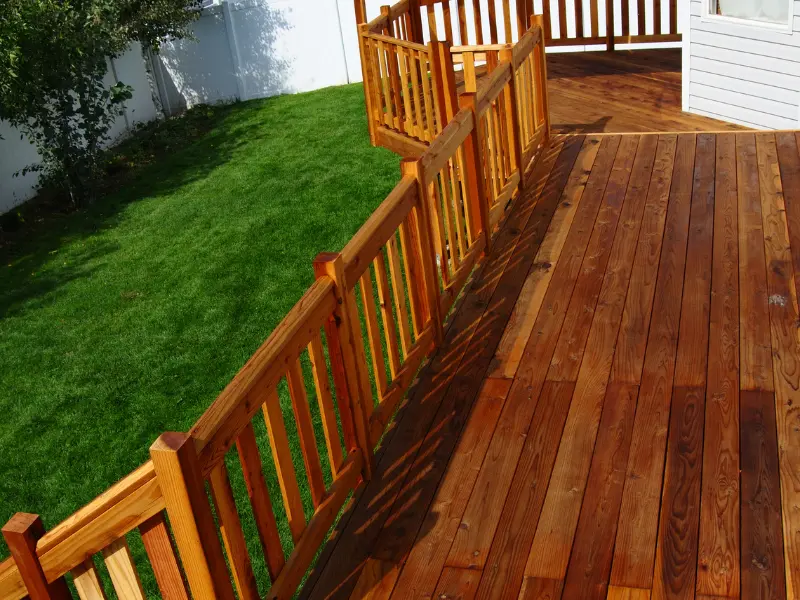
Stair guards are a different number from deck guards, and mixing them up is a common inspection failure. Deck guard: 36 inches from the deck surface. Stair guard: 34 inches from a line connecting the nosings.
Then consistency. Riser heights within a flight have to match closely, and a stepped deck means several flights instead of one. More flights, more chances to be a quarter-inch out. Geometry is unforgiving and it's the first thing an inspector puts a tape on. Openings matter too: a 4-inch sphere shouldn't pass guard infill, 4⅜ inches on stairs.
Designing for a Sloped Tennessee Yard
The question of which deck levels work for sloped Tennessee yards depends on how much your grade falls across the deck footprint.
Under two feet of fall. One low level with a couple of steps usually still wins. A second platform buys little.
Two to five feet. Where two tiers earn their keep. Upper platform at door height for grilling and traffic, lower one stepped down for seating, with the break placed so the lower level lands under thirty inches if the grade allows.
More than five feet. Three levels, or a deck plus a landing partway down. The alternative is one platform on very tall posts with larger footings, bracing, and guard everywhere.
Two Rutherford County specifics change the math. More levels means more footings, and much of the county sits on limestone with shallow bedrock, so every extra footing is another chance to hit rock and need drilling. We dig test holes before quoting. And a lower platform sitting against a slope can trap water behind it in a wet spring.
Our guide to wood deck installation in Smyrna covers material selection, ground-contact framing, and the Town's permit and site plan process in more detail.
What It Costs Against a Single Level
How much does a multi level deck cost isn't answerable as a flat premium, because the honest comparison depends on what you're comparing it to.
Against a low single deck of the same square footage, multi level costs more: extra footings and posts, a second framing set, stairs, and whatever guard the heights require.
Against a single deck at door height on a sloped lot, multi level often costs less, because the tall version needs long posts, larger footings, bracing, and guard around its entire perimeter at full height.
So are multi level decks worth the extra cost? On a flat lot, usually not. On a slope of more than a couple of feet you're often not paying a premium at all — you're paying less than the alternative and getting better space. Ask any builder to price both on your lot.
Cost drivers worth asking about: footing count and what happens if they hit rock, linear feet of guard, number of stair flights, decking material, and whether site work is included. We price after digging test holes, estimates are free, and financing is available.
Permits, Entertaining, and Smyrna Yards
A deck is an accessory structure in Smyrna and needs a permit and a site plan regardless of how many levels it has. What multi level adds is detail: the site plan needs to show each platform and its height, because the heights determine the guard requirement and the inspector will check them. So no, the levels don't trigger a different permit — they make the drawing more specific.
On entertaining, this is where multi level delivers what a single platform can't: zoning. Grill and prep upstairs by the kitchen door, dining and seating below, and traffic stops crossing the cook. Smoke drifts away from where people sit. A level change reads as a boundary without a wall, which is why stepped decks feel bigger than their square footage. Add a patio cover or pergola over the dining level and you've got a room. A screen room upstairs works too, and planning for it now beats retrofitting.
Across Smyrna the slope tells you what you'll build. Newer subdivisions toward Sherwood Green Lakes and the Nissan Drive corridor sit on graded lots with moderate fall — two-tier territory. Older neighborhoods around Weakley Lane and Hazelwood run flatter, where a single low deck serves better. Our Smyrna page covers local work, we build across Murfreesboro, and the range is on our decks page. Full city list on our locations page, completed builds in the gallery, and our patio cover installation guide covers a comparable sequence.
If you've been searching multi level deck installation Smyrna TN, comparing the best multi level deck builders near Smyrna TN, or looking at multi level deck design Nashville TN and the top rated multi tier deck designers in the Nashville area, ask one thing first: what height will each level sit at? Everything else follows from that.
Frequently Asked Questions
1. What is the difference between a multi level deck and a tiered deck?
There isn't a code distinction, and builders use the terms interchangeably. In common usage, "tiered" suggests platforms stepping down in the same direction following the natural grade, while "multi level" gets applied more loosely to platforms at different heights that may face different directions or serve different functions. Both describe the same structural idea: separate framed platforms at different elevations connected by steps. Nobody should charge a premium based on which word appears on the quote.
2. Do multi level decks need additional permits in Tennessee?
No, not additional ones. A deck is an accessory structure and needs a building permit and site plan whether it has one level or three. What changes is the detail required on the drawing: each platform and its height above grade has to be shown, because height determines whether a guard is required and how tall it must be. Inspectors measure those heights. Confirm the adopted code and any local modifications with your building department, since towns amend the model code.
3. How do you design a multi level deck for a sloped yard?
Start by measuring how much the grade falls across the deck footprint. Under about two feet, a single low platform with steps usually serves better. Two to five feet of fall is where two tiers pay off — upper level at door height for traffic and grilling, lower level stepped down for seating. Above five feet, three levels or a deck with an intermediate landing. Place the level breaks so platforms land under thirty inches above grade where the slope allows, since that's the height at which a guard becomes mandatory.
4. How much more do multi level decks cost than single level?
It depends which single-level deck you're comparing against. Versus a low deck of the same square footage, multi level costs more — extra footings, posts, framing, stairs, and guard. Versus a single platform at door height on a sloped lot, multi level often costs less, because the tall version needs long posts, larger footings, lateral bracing, and guard around its entire perimeter at full height. On a sloped lot, ask any builder to price both so you can see the actual difference rather than a guess.
5. Are multi level decks good for entertaining?
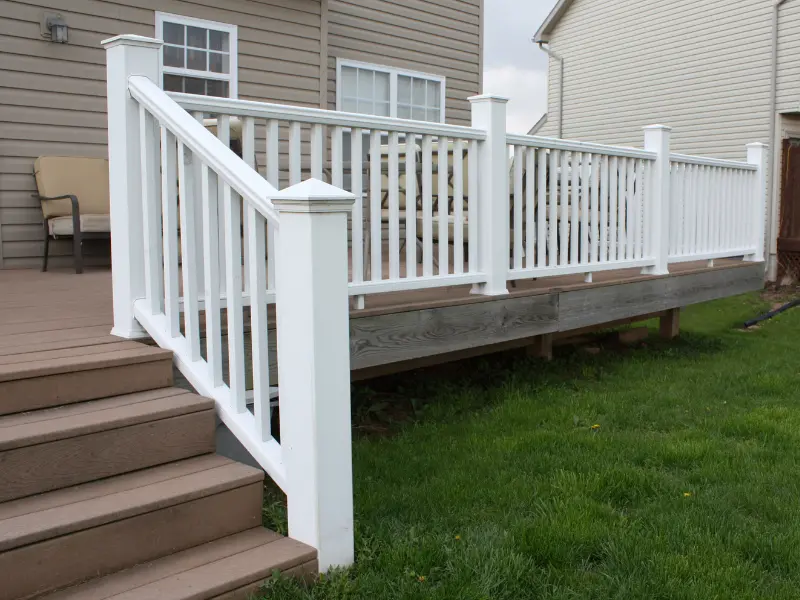
Genuinely, yes, and it's the strongest non-structural argument for them. Levels let you zone the space: grill and prep next to the kitchen door, dining and seating on a lower platform, so foot traffic stops crossing the cook and smoke drifts away from where people sit. A level change also reads as a boundary without a wall, which is why stepped decks feel larger than their square footage. Covering the dining level with a patio cover or pergola extends the season considerably.
Contact JB's Enclosures
JB's Enclosures 1349 Marymont Dr. Murfreesboro, TN 37129 Phone: (615) 713-7902 Veteran-owned, serving Smyrna including the Nissan Drive corridor, Weakley Lane, Sherwood Green Lakes, and Hazelwood, plus Murfreesboro and Rutherford County.
Got a slope you're not sure what to do with? Request a free on-site estimate or call (615) 713-7902, and we'll measure the fall, dig test holes, and price a stepped deck against a single tall one so you can see both.
